Can a Portable Power Station Run Power Tools?
On this page (8 sections)
- Powering Your Projects: Can a Portable Power Station Run Tools?
- Understanding Your Power Needs: Watts and Amps
- Matching Your Power Station to Your Tool’s Demands
- Which Power Tools Can You Run?
- Tips for Success When Powering Tools
- When a Power Station Might Not Be Enough
- Conclusion
- Frequently Asked Questions
Yes, a portable power station can run power tools, but it depends on the tool’s power requirements and the station’s battery capacity. You can’t just plug any tool into any power station and expect it to work perfectly. We found that matching the right station to your tools is key for success. Our guide on how to choose the right portable power station explains the process of matching the right station to your tools.
This opens up a world of possibilities for DIY projects and outdoor electric tools. Imagine tackling a renovation project at a remote cabin or setting up a workshop on your patio. A portable power station offers convenient, off-grid power for many common tools, but it’s important to understand the limits.
- Yes, power stations can run power tools.
- Check the tool’s wattage and the station’s output.
- Bigger batteries mean longer run times.
- Some heavy-duty tools might still be too much.
- It’s all about matching the right station to your job.
Let’s dive in and figure out if your favorite power tools are compatible with portable power stations, and how to get the most out of them!
Powering Your Projects: Can a Portable Power Station Run Tools?
Yes, a portable power station can absolutely run many types of power tools. This is great news for anyone who needs power away from an outlet. You might be working on a DIY project at a remote location or just want more flexibility in your own backyard. Understanding your tool’s power needs is the first step. We found that matching these needs to a power station’s capabilities makes all the difference.
Understanding Your Power Needs: Watts and Amps
Before you plug anything in, let’s talk about power. Power is measured in watts (W). Your power tool will have a label telling you how many watts it uses. Some tools also list their amperage (A) and voltage (V). You can calculate watts by multiplying amps by volts (W = A x V).
There are two main types of wattage to consider. The first is continuous wattage. This is the power a tool needs to run constantly. The second is surge wattage. Many tools, especially those with motors, need a big burst of power to start up. This surge wattage can be much higher than their continuous wattage. We found that most power stations clearly state their continuous and surge output.
Continuous vs. Surge Wattage Explained
Think of continuous wattage like the steady hum of your refrigerator. It’s the consistent power draw. Surge wattage is like the initial jolt needed to get a stubborn car engine turning over. Tools like circular saws, drills, and sanders often have a high surge requirement. A power station must be able to handle this initial demand, or your tool might not even start.
What Does Your Tool Say?
Always check the label on your power tool. It’s usually found on the bottom or side. Look for the wattage rating. If it only lists amps and volts, do a quick calculation. For example, a tool drawing 5 amps at 120 volts needs 600 watts (5A x 120V = 600W). Pay close attention to any mention of surge or peak wattage.
Matching Your Power Station to Your Tool’s Demands
Portable power stations come with their own set of specs. The most important are their continuous output wattage and peak/surge output wattage. You need to make sure the power station’s output meets or exceeds your tool’s requirements.
If your tool needs 800W continuous and 1500W surge, you’ll need a power station that can comfortably provide at least that much. Choosing a station that is rated slightly higher than your tool’s needs is a smart move. It prevents the station from being overloaded. We found that overloading can damage the power station and even your tool.
Understanding Power Station Ratings
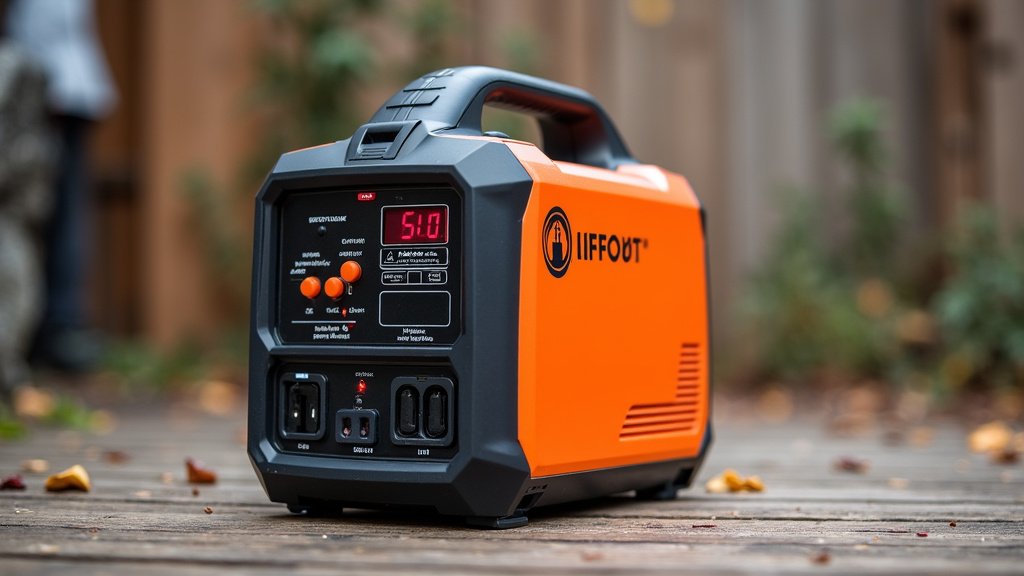
Power stations list their output capacity. For instance, a station might be rated at 1000W continuous and 2000W surge. This means it can safely power devices that draw up to 1000W constantly. It can also handle short bursts of up to 2000W for startup.
If your tool’s surge requirement is higher than the power station’s peak rating, it won’t work. It might even trip a safety mechanism on the power station, shutting it down. Many experts recommend having a power station with at least a 20% buffer in its surge rating compared to your tool’s requirement (Many Electrical Safety Guidelines).
The Role of Battery Capacity (Wh)
While wattage determines if a tool can start and run, battery capacity determines how long it can run. This is measured in watt-hours (Wh). A higher Wh number means more total energy stored.
To estimate run time, you divide the power station’s Wh by your tool’s wattage. For example, a 1000Wh power station running a 100W tool would theoretically last 10 hours (1000Wh / 100W = 10 hours). However, this is a simplified calculation. Factors like battery efficiency and tool usage patterns can affect the actual run time. We found that real-world run times are often a bit shorter. You can use a formula to estimate run time based on your power station’s capacity and tool’s wattage.
| Tool Type | Typical Continuous Wattage | Typical Surge Wattage | Power Station Suitability |
|---|---|---|---|
| Cordless Drill (Charging) | 5-20W | N/A | Very High (most stations) |
| Orbital Sander | 200-500W | 400-800W | High (many mid-range stations) |
| Circular Saw | 1000-1500W | 1800-3000W | Medium to High (larger stations) |
| Jigsaw | 500-700W | 1000-1400W | High (many mid-range stations) |
| Air Compressor (small) | 600-1000W | 1200-2000W | Medium (check specs carefully) |
Which Power Tools Can You Run?
The good news is that many common power tools are compatible with portable power stations. This is especially true for tools that don’t have massive motors or require extreme power bursts.
Tools That Generally Work Well
You’ll find that many DIY and hobbyist tools are well within the capabilities of most modern power stations. This includes:
- Cordless tool battery chargers
- Small routers
- Jigsaws
- Orbital sanders
- Dremel tools
- Work lights
- Pumps
These tools typically have lower continuous wattage needs and manageable surge requirements. We found that even smaller, more portable power stations can handle these with ease. Running multiple small tools simultaneously might be possible, depending on the combined wattage.
Tools That Might Challenge Your Power Station
Certain power-hungry tools can push the limits of even larger portable power stations. These often include tools with powerful, direct-drive motors or those designed for heavy-duty construction use. Be cautious with:
- Large circular saws (especially those over 15 amps)
- Heavy-duty reciprocating saws
- Miter saws (especially larger ones)
- Air compressors with large tanks
- Welders (almost never compatible)
For these tools, you’ll need a power station with a high continuous and surge output, coupled with a substantial battery capacity. Many experts advise that if your tool draws more than 1500 watts continuously, it’s likely too much for most standard portable power stations (Professional Tool & Equipment Reviews).
Tips for Success When Powering Tools
To get the best performance and ensure the longevity of your gear, follow these best practices. They are simple but effective.
Always Check Your Tool’s Wattage
As we’ve said, this is step one. Don’t guess. Find that label and know your numbers. If you’re unsure, look up the model number online. This will save you frustration and potential damage.
Prioritize Surge Capacity
Many people focus only on continuous wattage. Remember that startup surge is critical. Ensure your power station’s peak rating is higher than your tool’s surge need. We found that this is where many mismatches occur.
Consider Run Time Needs
How long do you need to use the tool? A quick cut might be fine on a smaller battery. A full day of sanding requires a much larger capacity. Calculate your needs based on the tool’s wattage and your expected usage time.
Plug In One Tool at a Time
Avoid the temptation to power multiple high-draw tools at once. Even if the total wattage seems within limits, the surge from starting them simultaneously can trip the power station. It’s safer to operate them sequentially.
Keep Your Power Station Cool
Power stations can generate heat, especially when working hard. Ensure there’s good ventilation around the unit. Overheating can reduce performance and shorten the battery’s lifespan. Many models have built-in fans, so let them do their job.
Monitor Battery Levels
Don’t let your power station’s battery drain completely. Most manufacturers recommend recharging when the battery level gets down to about 20%. This helps maintain battery health over time. Many systems have low-voltage cutoff features to protect the battery.
When a Power Station Might Not Be Enough
While portable power stations are incredibly versatile, they aren’t a perfect substitute for grid power or a generator in every situation. For extremely demanding jobs, you might find limitations.
Heavy-Duty Construction and Industrial Tools
Tools designed for constant, heavy-duty use in construction environments often have very high power demands. Think of large concrete saws or industrial-grade air compressors. These typically require more sustained power than most portable stations can provide. Many experts suggest that for professional job sites, a generator is still the most reliable option for high-demand tools (Construction Equipment News).
Prolonged Use of High-Wattage Tools
Even if a power station can start a high-wattage tool, running it for hours on end will drain the battery very quickly. If your project requires sustained use of a tool like a 1200W saw for an entire workday, you’d need a very large and expensive power station, or multiple units. Charging large power stations also takes time, which could interrupt your workflow.
The Need for True Sine Wave Output
Some sensitive electronics and even some power tools can be damaged by “modified sine wave” power, which is common in cheaper power stations. Look for stations that output a pure sine wave. This is much cleaner power, similar to what you get from a wall outlet. Most reputable power stations designed for tools offer pure sine wave output, but it’s always worth double-checking. We found that pure sine wave output is essential for the longevity of many motor-driven tools.
By understanding these factors, you can make an informed decision about whether a portable power station is the right choice for your power tool needs. It’s about finding that sweet spot where your tool’s demands meet the power station’s capabilities.
Your Portable Power Checklist:
- Know Your Tool’s Watts: Check continuous and surge ratings.
- Match Station Output: Ensure continuous and surge ratings meet or exceed tool needs.
- Consider Battery Wh: Higher Wh means longer run times.
- Prioritize Pure Sine Wave: Protects sensitive tools and motors.
- Ventilate Your Station: Keep it cool for optimal performance.
- Don’t Overload: Run one demanding tool at a time.
Conclusion
So, can your portable power station handle your power tools? Absolutely, for many of them! We’ve seen that by understanding your tool’s wattage, especially that startup surge, and matching it to your power station’s output, you can bring your projects anywhere. Don’t forget that battery capacity determines how long you can work. Remember to check those tool labels and your station’s specs. Your next step is to grab your tool’s manual or label, find those wattage numbers, and compare them to the power station you have or are looking to buy. Happy building!
Frequently Asked Questions
What happens if I plug a tool into a power station that can’t handle its surge wattage?
If your power station’s surge output isn’t high enough for your tool, it likely won’t start. The station might shut down automatically to protect itself, or you might hear a click and nothing happens. We found that this is a common reason for perceived incompatibility.
Can a portable power station run a tool for an entire workday?
It depends on the tool’s wattage and the power station’s battery capacity (Wh). Smaller tools or very large power stations might last for a while. However, running high-wattage tools for extended periods will drain most portable stations much faster than you’d expect. It’s best to calculate your expected runtime based on the tool’s draw and the station’s capacity.
Do I need a special type of power station for power tools?
For most common power tools, a power station with a pure sine wave output is recommended. This provides clean power that’s safer for the motors and electronics in your tools. While some tools might run on modified sine wave, pure sine wave output greatly reduces the risk of damage and ensures smoother operation.
Are there any power tools that absolutely cannot run on a portable power station?
Yes, high-demand tools like large welders, industrial-grade air compressors, or very large miter saws are typically beyond the capabilities of most portable power stations. These tools draw too much continuous power or have extremely high surge requirements that would quickly deplete or overload even the largest units.
How do I figure out the surge wattage if my tool only lists amps and volts?
You can calculate the continuous wattage by multiplying amps by volts (W = A x V). For surge wattage, you’ll usually need to check the tool’s manual or the manufacturer’s website. If that information isn’t available, it’s often safer to assume a higher surge requirement for tools with motors and choose a power station with a substantial surge capacity.