Can OUPES Power Station Charge from a Wind Turbine?
An OUPES power station may charge from a wind turbine only when the turbine setup delivers regulated DC power within the station's input limits. Do not connect a raw turbine directly without checking the OUPES manual and using a suitable controller.
On this page (7 sections)
- Can OUPES powerstation charge from a wind turbine?
- Why does a wind turbine need a charge controller?
- Can you use a solar panel instead of a wind turbine?
- What are the main risks of wind charging?
- Can you leave a wind or solar source connected continuously?
- How should you choose between wind and solar charging?
- What is the safest answer for an OUPES power station?
An OUPES power station may charge from a wind turbine only when the turbine system sends regulated DC power within the station's input limits. A raw turbine should not be connected directly because wind speed changes can make its voltage and current change quickly.
The key issue is not whether the turbine produces electricity. The issue is whether its output matches the OUPES charging input at every point in the setup.
Check the exact OUPES model manual for its allowed voltage, current, connector, and maximum input wattage before buying cables or a controller.
Can OUPES powerstation charge from a wind turbine?
An OUPES powerstation can charge from a wind turbine only with confirmed input compatibility and suitable regulation. The turbine normally needs a wind charge controller, a safe diversion or braking method, and wiring that produces the type of DC input the power station accepts.
A solar input does not automatically make a power station suitable for wind charging. Solar panels have a more predictable voltage pattern, while a wind turbine can speed up, slow down, or produce little power depending on the wind.
The OUPES manual is the final source for the station's input range. If it does not mention wind turbines, treat the setup as unapproved until OUPES confirms the required electrical limits in writing.
Why does a wind turbine need a charge controller?
A wind charge controller manages the turbine's changing output before it reaches the power station. It can regulate voltage, control charging, and send excess energy to a safe diversion load when the battery or power station cannot accept more energy.
A controller designed only for solar may not handle turbine behavior correctly. Wind systems can continue producing energy as the blades turn, so the system needs a way to control or divert that energy rather than leaving the turbine electrically unloaded.
Choose the controller from the turbine's rated voltage and power, not from the OUPES name alone. Then confirm that the controller's output stays inside the OUPES input window during startup, normal wind, and stronger gusts.
The U.S. Department of Energy explains that small wind systems need suitable electrical controls, wiring, towers, and safety equipment.
Its small wind electric systems guidance is a useful starting point before planning a home or off-grid installation.
What should you check before connecting the turbine?
Check these values in the OUPES manual and the turbine documentation:
- The OUPES solar or DC input voltage range.
- The maximum input current.
- The maximum charging wattage.
- The connector type and polarity.
- Whether the input accepts a regulated controller output.
- Whether OUPES permits wind charging at all.
The controller must keep the output inside those limits. A turbine rated at a certain wattage does not guarantee that its voltage will remain safe for the power station.
Use a fuse or breaker where the turbine manufacturer requires one. Keep connectors dry, protect cables from abrasion, and use a qualified electrician for permanent wiring or rooftop work.
Can you use a solar panel instead of a wind turbine?
Solar is usually the simpler charging choice for an OUPES power station. A compatible panel and cable are easier to size, and many portable power stations are designed around solar charging input.
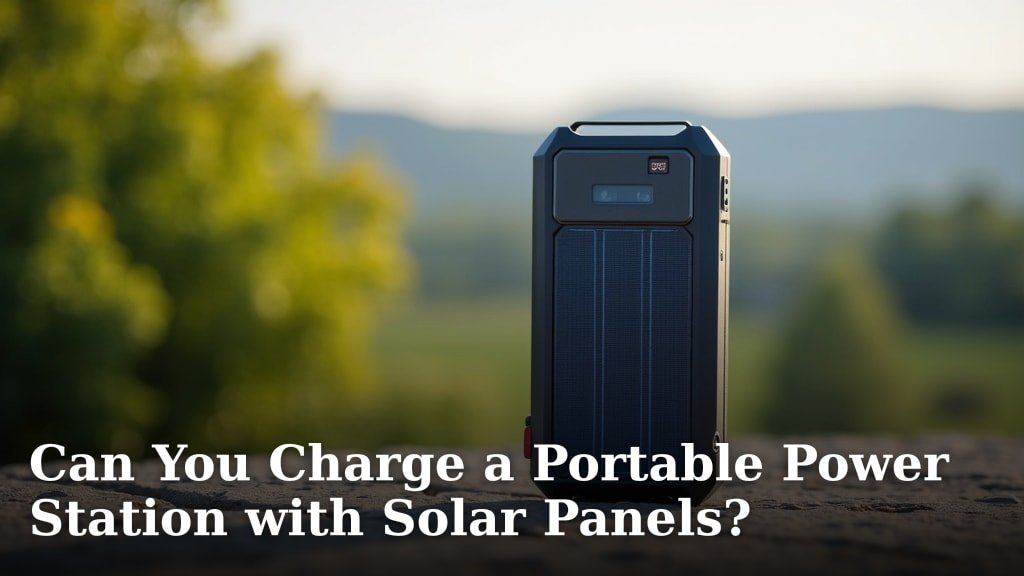
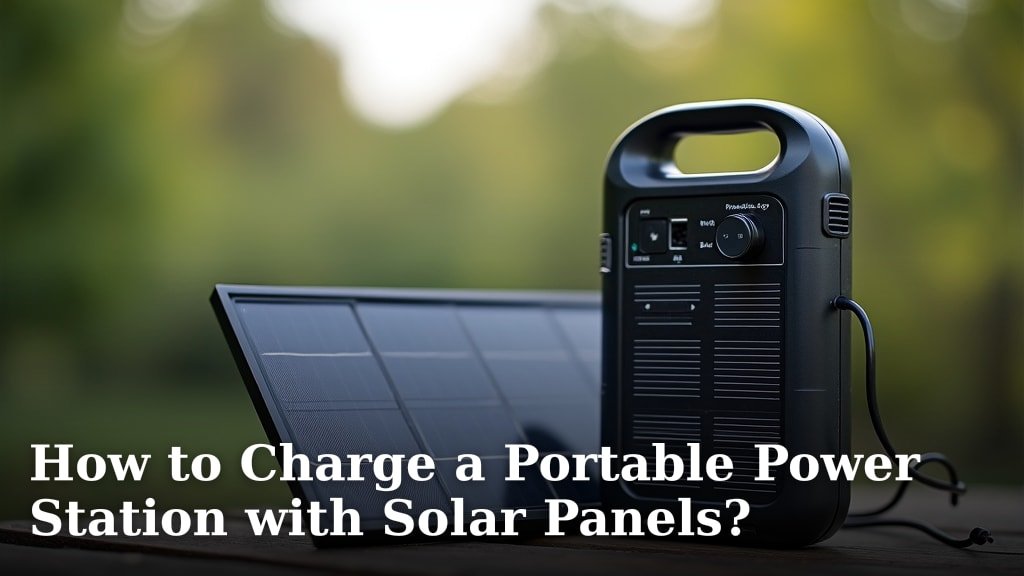
Our guide to How to Charge a Power Station with Solar Panels explains how to match panel voltage, current, connector type, and total wattage. For the basic compatibility question, see Can You Charge a Portable Power Station with Solar Panels?.
A solar panel still needs the correct electrical range. More panel wattage does not make an incompatible voltage safe, and shade, angle, and weather can reduce actual output.
Which solar panel suits a simple backup setup?
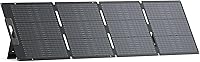
The BLUETTI 200W Solar Panel for Solar Generator is a useful solar alternative when you want a foldable 200W panel with a solar connector. Its monocrystalline cells have up to 23.4% efficiency, and its folded size is 22.5 x 23.6 x 2.9 in with a weight of 17.2 lb.
BLUETTI lists compatibility with several BLUETTI power stations, including the EB3A, AC2A, AC50B, AC70, AC180, AC200L, Elite 200 V2, AC300, AC500, and B300K. It also says the panel can charge most other power stations when the VOC, stated as 24.6 V, is compatible.
Use the panel only after checking the OUPES station's solar input range. Its 200W rating is an ideal maximum, so sunlight strength, panel angle, temperature, and shade affect the power you receive.
What if you need a larger solar generator system?
The EF ECOFLOW Solar Generator 3.6KWh DELTA Pro combines a 3600Wh power station with a 400W portable solar panel and solar charge cable. The package includes the DELTA Pro 3600Wh Power Station, and the power station has 15 outputs, including 5 AC outlets, 4 USB-A ports, 2 USB-C ports, 2 DC ports, 1 car power output, and 1 Anderson port.
The 400W panel has a stated conversion rate of 22.4%. EF ECOFLOW says one 400W panel can fully recharge the power station in 11 hours, while 3 panels can do so in 3.5 hours under its stated conditions.
This is not an OUPES accessory, so it should not be treated as a direct OUPES charging solution. It is better suited to readers deciding whether a complete solar generator package is simpler than assembling a turbine, controller, wiring, and protection devices.
Is a portable 200W panel useful for testing solar first?
The EBL 200W Portable Solar Panel for Power Station, Foldable IP65 Waterproof suits readers who want a foldable 200W panel with several connector options. It includes an MC4 to 4-in-1 solar charge cable with XT60, Anderson, DC79*09mm, and aviation connectors.
The panel uses monocrystalline silicon, has a stated efficiency of up to 23.5%, and folds to 25.31 x 20.87 x 2.17 in. Its weight is 18 lb, and its maximum voltage is 35 V DC.
Those connector options do not prove compatibility with an OUPES station. Match the panel's voltage and connector wiring to the OUPES manual before connecting it.
What are the main risks of wind charging?
The main risks are excess voltage, uncontrolled charging, reverse current, bad polarity, and an unloaded turbine. These problems can damage the power station, controller, turbine, or wiring.
A wind turbine can also produce power when you are not watching it. Do not rely on unplugging the cable as the only control method, especially during strong wind.
Place the controller and any diversion load where they can stay dry and cool. Follow the turbine manufacturer's grounding and shutdown instructions, and use weather-rated cable entries outdoors.
If the OUPES manual does not specify a wind-compatible input method, contact OUPES before making an adapter. A connector that fits physically may still have the wrong polarity or electrical range.
Can you leave a wind or solar source connected continuously?
Continuous connection depends on the power station's charging controls and the source's ability to limit output safely. A wind turbine should not remain connected just because the station has stopped charging.
For solar systems, the station may manage normal input changes, but the manual still controls whether continuous connection is allowed. Read Can You Leave Solar Panels Connected to a Power Station Continuously? before leaving a panel attached.
For wind, the controller must also manage energy when the station is full or disconnected. That may require a diversion load or another approved load path.
How should you choose between wind and solar charging?
Choose solar when you want a simpler portable setup, and consider wind only when your site has reliable wind and you can install the correct controller and protection. The OUPES input limits decide whether either source can be used safely.
Use the following decision rule:
- Choose a compatible solar panel for quiet, portable charging.
- Choose a wind turbine only after confirming regulated controller output.
- Choose a hybrid setup only when both sources have separate, compatible controls.
- Avoid raw turbine-to-power-station wiring.
- Stop if the OUPES manual does not confirm the required input range.
For solar controller questions, our guide to the Best Solar Charge Controller For Power Station explains why voltage, current, connector type, and controller design matter.
What is the safest answer for an OUPES power station?
Do not connect a wind turbine directly to an OUPES power station. First confirm the OUPES input limits, select a wind controller designed for the turbine, verify the controller's regulated output, and follow the wiring and shutdown instructions.
If you want the least complicated route, start with a compatible solar panel. If you still want wind charging, get written confirmation from OUPES before connecting the system, especially when the manual does not mention wind turbines.
Frequently asked questions
Can an OUPES power station use a wind turbine?
Possibly, but only if the turbine system uses a suitable charge controller and sends DC power within the OUPES station's voltage, current, and wattage limits. Check the exact OUPES manual before connecting anything.
A turbine's changing output can damage the input when it is not regulated.
Do I need a wind charge controller for an OUPES power station?
Yes, a wind charge controller is normally needed between the turbine and power station. It helps manage changing turbine voltage, diverts or limits excess energy, and may provide a suitable DC output.
The controller must match the turbine and the OUPES input requirements.
Can I connect a wind turbine directly to a solar input?
Do not connect a wind turbine directly to a solar input unless OUPES specifically approves that setup. Solar inputs expect a defined DC voltage range, while a turbine can produce changing voltage and sudden surges.
Use a compatible controller and follow the station's wiring instructions.
Is solar easier than wind for charging a portable power station?
Solar is usually easier because compatible foldable panels and cables are widely available, and power stations commonly include solar charging controls. Wind can work in the right location, but it needs a correctly sized turbine, controller, wiring, and protection against changing output.