How to Run a Chest Freezer on Solar Power Station?
On this page (3 sections)
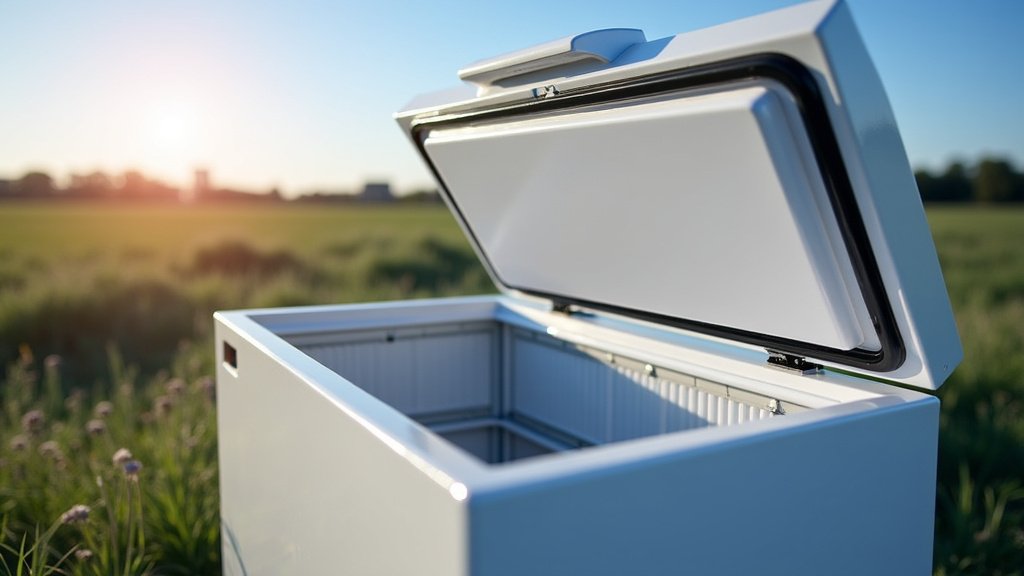
You can run a chest freezer on a solar power station by connecting it directly to the power station’s AC outlet. We found that you need to ensure the power station has enough capacity and output to handle the freezer’s surge and running watts. This freezer backup setup is great for off-grid cooling or emergencies.
Running a freezer this way provides reliable cold storage without traditional grid power. Many people use this for camping, cabins, or as a backup during outages. It’s about finding the right balance between your freezer’s power needs and your solar power station’s capabilities. Our guide on how to choose the right portable power station can help you match your needs to the perfect unit.
- Connect your chest freezer directly to a compatible solar power station.
- Match the power station’s capacity to your freezer’s wattage requirements.
- Use an efficient chest freezer for best results.
- Understand surge watts vs. running watts for your freezer.
- This setup works well for emergencies or off-grid living.
Let’s walk through exactly how you can set this up effectively and keep your food frozen, no matter what.
Powering Your Chest Freezer with Solar: The Essentials
To run your chest freezer using a solar power station, you need to match the freezer’s power requirements to the solar station’s capabilities. The same planning helps with cooking on a power station. This involves understanding both running watts and surge watts.
It’s simpler than it sounds. You’re basically connecting a large appliance to a big battery. Let’s break down what you need to know.
Understanding Your Freezer’s Power Needs
Your chest freezer isn’t just one number when it comes to power. It has two main wattage ratings you need to pay attention to. Ignoring these can lead to frustration or a tripped power station.
Running Watts vs. Surge Watts
Every appliance has a running wattage. This is the power it constantly draws once it’s already working. For a chest freezer, this is the power it uses to maintain its cold temperature.
Then there are surge watts. This is a temporary burst of power an appliance needs when it first starts up. Think of it like a sprint before a marathon. The compressor in your freezer needs a lot of juice to get going (Energy Star).
- Running Watts: The continuous power draw once the freezer is operating normally.
- Surge Watts: The brief, higher power demand when the compressor first kicks on. This can be 2-3 times the running watts.
We found that most chest freezers will have their wattage information on a sticker on the back or inside the door. If not, check the user manual or the manufacturer’s website. Always go with the highest surge wattage you can find for your freezer model.
Selecting the Right Solar Power Station
Choosing the correct solar power station is key. You can’t just pick any one off the shelf. It needs to handle both the continuous and the peak power demands of your freezer.
Inverter Output (Wattage)
The first thing to look at is the inverter’s continuous output wattage. This is how much power the station can deliver constantly. This number must be higher than your freezer’s running watts.
Even more important, the inverter must also handle the surge wattage. Many power stations will list a “peak” or “surge” output. This number needs to be greater than your freezer’s surge watts.
If the power station’s surge capacity is too low, it will likely shut down when the freezer tries to start. This is a built-in safety feature, but it’s annoying when you’re counting on it.
Battery Capacity (Watt-Hours)
After output, consider the battery capacity. This is measured in watt-hours (Wh). It tells you how long the power station can supply power. Think of it as the size of the fuel tank.
To estimate your needs, multiply your freezer’s running watts by the number of hours you want it to run. For example, a 100W freezer running for 24 hours needs 2400 Wh of capacity. However, freezers don’t run constantly. They cycle on and off.
We found that a good rule of thumb is to assume your freezer runs about 8-12 hours per day, depending on insulation and ambient temperature. So, for a 100W freezer, you might need 800-1200 Wh of usable capacity per day.
Always over-estimate your needs. You want a buffer. What if the sun doesn’t shine for a day or two? We always recommend buying a power station with at least 2-3 days of capacity for your freezer if possible.
Setting Up Your Solar Freezer System
Once you have your power station and freezer, setting them up is straightforward. There aren’t many complex steps, but precision helps.
Step-by-Step Connection Guide
Follow these simple steps to get your freezer running:
- Place your solar power station: Position it in a dry, well-ventilated area, protected from direct sunlight or extreme temperatures.
- Charge the power station: Fully charge your power station using its included AC adapter or solar panels before connecting the freezer. A full charge gives you the best starting point.
- Connect the freezer: Plug your chest freezer directly into one of the power station’s AC outlets. Make sure the power station is turned on and its AC output is activated.
- Monitor performance: Keep an eye on the power station’s display. It will show the current power draw and remaining battery life.
- Optimize solar charging (if applicable): If you’re using solar panels, position them for maximum sun exposure. Angle them towards the sun, and adjust them throughout the day if you can.
That’s it! Your freezer should hum to life. Listen for the compressor starting up. If the power station shuts off, it likely couldn’t handle the surge wattage. Recheck your calculations or consider a more powerful station.
Tips for Maximizing Efficiency
Running a chest freezer on solar power is all about efficiency. Every watt saved is longer your food stays cold or less solar charging you need.
Choose an Energy-Efficient Freezer
This is probably the biggest game-changer. An Energy Star-rated chest freezer uses significantly less power than older models. We found that some modern freezers can use less than half the power of older ones. If you’re buying a new freezer for this purpose, prioritize efficiency (Energy Star).
Insulation and Placement
Good insulation helps your freezer hold its temperature longer. This means the compressor runs less often. Also, place your freezer in the coolest spot possible. Avoid direct sunlight. Keep it away from heat sources like ovens or water heaters.
Leave some space around the freezer for air circulation. This helps the compressor stay cool and work efficiently.
Manage Contents Wisely
Keep your freezer as full as possible. Frozen items act like ice packs, helping to maintain the internal temperature. If your freezer isn’t full, fill empty spaces with jugs of water (they’ll freeze!).
Don’t open the freezer door more than necessary. Every time you open it, cold air escapes, and warm air enters, forcing the compressor to work harder.
Common Problems and Troubleshooting
Even with careful planning, sometimes things don’t go as planned. Here are some common issues you might encounter.
Power Station Shuts Down
If your power station turns off when the freezer tries to start, it’s almost always a surge wattage issue. The freezer’s compressor demands more power than the power station can temporarily provide.
- Solution: Verify your freezer’s surge wattage. You might need a power station with a higher peak output. Sometimes, trying a different AC outlet on the power station can help if one is designed for higher loads.
Battery Drains Too Quickly
This usually means the power station’s capacity isn’t large enough for your freezer’s daily power consumption, or your solar panels aren’t collecting enough energy.
- Solution: Re-calculate your daily energy needs. Consider a power station with a larger battery (more Wh). If using solar, ensure your panels are optimally placed and clean. Add more solar panels if possible.
Freezer Isn’t Getting Cold Enough
If the freezer is running but not reaching temperature, it might be an issue with the freezer itself, or it’s not running long enough.
- Solution: Check the freezer’s thermostat. Ensure the power station is providing continuous power, not just brief bursts. Make sure the freezer isn’t overloaded and has good air circulation around it. If it’s an old freezer, its efficiency might be very low.
Always consult your power station’s manual for specific troubleshooting steps. They often have helpful diagnostic information.
Checklist for Your Solar Freezer Setup
Here’s a quick checklist to ensure you’ve covered all your bases for a successful solar-powered freezer:
Know your freezer’s running watts: You found this on the label or in the manual.
Determine your freezer’s surge watts: This is critical for startup. Often 2-3x running watts.
Select a power station with adequate AC output: It must exceed both your freezer’s running and surge watts.
Choose a power station with sufficient battery capacity (Wh): Enough to cover daily use and provide a buffer for cloudy days.
Consider an Energy Star-rated chest freezer: This dramatically cuts down on power consumption.
Optimize freezer placement and usage: Keep it in a cool spot, full, and don’t open it often.
With careful planning and the right equipment, you can reliably run your chest freezer using a solar power station. It’s a fantastic way to ensure cold storage, whether for emergencies or an off-grid lifestyle.
Conclusion
Running your chest freezer on a solar power station is entirely achievable when you match the equipment correctly. You’ve learned about balancing your freezer’s surge and running watts with your power station’s output and battery capacity. Prioritizing an efficient freezer and smart usage habits will maximize your success and keep your food safely frozen. This setup offers incredible peace of mind for off-grid living or emergency preparedness.
Now, take what you’ve learned, check your freezer’s labels, and confidently choose the right solar power station for your needs.
Frequently Asked Questions
Can I run other appliances like a refrigerator on a solar power station?
Yes, you can run other appliances, including a standard refrigerator, on a solar power station. The principles remain the same: calculate the appliance’s running and surge watts, then ensure your power station’s output and battery capacity can handle them. Refrigerators generally use more power than chest freezers because they are opened more often and often have automatic defrost cycles.
How long will a solar power station typically run a chest freezer?
The run time depends entirely on the power station’s battery capacity (watt-hours) and your freezer’s daily power consumption. We found that a good estimate is around 8-12 hours of actual run time for the compressor per day. A 1000Wh power station might run an efficient chest freezer for one to two days before needing a recharge, assuming good solar input.
Do I need solar panels if I only want to use the power station for emergencies?
Not necessarily. For emergency backup, you can fully charge your solar power station from a wall outlet before an anticipated outage. However, to extend the run time beyond the initial charge or for prolonged outages, solar panels become essential for recharging the power station during the day.
What factors reduce a chest freezer’s efficiency when running on solar?
Several factors can reduce efficiency. Frequent opening of the lid allows cold air to escape. Placing the freezer in a warm environment (like direct sunlight or a hot garage) forces the compressor to work harder. Poor insulation, an empty freezer, or a dirty condenser coil also increase power consumption, draining your power station faster.
Can I connect multiple chest freezers to one solar power station?
You can connect multiple chest freezers if the solar power station’s total continuous and surge output can handle the combined wattage of all freezers. This also means you’ll need a significantly larger battery capacity to sustain them. Always add up the individual running and surge watts of all appliances you intend to connect to avoid overloading the station.