Jackery SolarSaga 200W Solar Panel Review: Worth It? (November 2026)
The Jackery SolarSaga 200W is a foldable panel with USB-A, USB-C and DC8020 connections, but its cable also includes a DC7909 adapter. Check your power station's input port and generation before buying.
On this page (8 sections)
- Is the Jackery SolarSaga 200W a good fit?
- What connector does the SolarSaga 200W use?
- How does the JS-200D differ from older SolarSaga 200 panels?
- How much power can you expect from a 200W panel?
- Should you buy the panel alone or a bundle?
- What are the main alternatives?
- What should you check before buying?
- Is the Jackery SolarSaga 200W worth choosing?
The Jackery SolarSaga 200W is a foldable 200W panel with USB-A, USB-C and DC8020 connections. Its included cable has both DC8020 and DC7909 ends, so confirm your power station's model and input before choosing it, especially if you have an older SolarSaga generation.
The JS-200D is the model code to check. Jackery names several Explorer models as compatible, but a connector match and the power station's solar input limit still matter.
Is the Jackery SolarSaga 200W a good fit?
The SolarSaga 200W makes sense when you want a portable panel with direct USB ports and a DC connection for a compatible Jackery station. It weighs 14.3 lb, folds to 24 x 21.7 x 1.8 in, and has a stated 200W maximum power rating.
Jackery SolarSaga 200W Portable Solar Panel: Best for a direct Jackery match

- 200W rated power
- USB-A and USB-C ports
- DC8020 port
- 14.3 lb
A foldable 200W panel with USB-A, USB-C and DC8020 connections. Check your power station's input port and cable needs, especially if it is an older Jackery model.
Pros
- USB-A and USB-C ports are built in
- Includes a cable with DC8020 and DC7909 connectors
- Bifacial design and IP68 rating
Cons
- The 9.8 ft charging cable is not weatherproof
- Connector fit depends on the power station generation
Jackery describes its panel as bifacial, with IBC technology and conversion efficiency up to 26.7%. That figure is a maker claim, not a promise of the output you'll see in changing sun, shade, panel angle or temperature.
The stated operating temperature range is -4°F to 149°F, and the panel is rated IP68 for water and dust resistance. Its 9.8 ft charging cable is specifically not weatherproof, so keep the cable connections sheltered and follow the manual's setup guidance outdoors.
Who should consider the JS-200D?
Consider it if your station accepts the panel's DC connection, you want a 200W rated panel, and a 14.3 lb folding unit suits how you travel. Compare 200W folding solar panels for alternatives.
Built-in USB-A and USB-C ports also give you a way to charge compatible devices directly.
It may be a poor match if you need a very light panel for carrying long distances or if your power station's input uses a different connector. If you are comparing smaller panels, see our Jackery SolarSaga 100W panel review.
What connector does the SolarSaga 200W use?
The JS-200D has a DC8020 panel port, plus USB-A and USB-C ports. Its included cable has a DC8020/DC7909 connector arrangement, but the power station end must fit the input on your exact model.
| Connection detail | SolarSaga 200W JS-200D |
|---|---|
| Panel's DC port | DC8020 |
| Included cable connectors | DC8020, DC7909, USB-A, USB-C |
| Direct device ports | USB-A and USB-C |
| Cable length | 9.8 ft |
| Cable weather resistance | Not weatherproof |
Connector names can be easy to mix up because a panel cable may include more than one end or adapter. Compare the model number, input port and manual for your power station before buying a replacement cable or assuming that a cable from an older panel will fit.
Jackery names the Explorer 1000 Plus, 2000 Pro, 2000 Plus and 3000 Pro as compatible with this panel. That list is a useful starting point, but your station's solar input limit and exact connector still determine whether the setup is suitable.
For a broader compatibility comparison, use our guide to the best Jackery compatible solar panel. It helps frame the connector question across different station brands and panel options.
How does the JS-200D differ from older SolarSaga 200 panels?
The JS-200D model code is the key generation check because connector details can differ among SolarSaga 200W versions. Don't assume a panel, adapter or cable from an older JS-200C setup is identical to this JS-200D.
The information available for this JS-200D identifies a DC8020 panel port and a cable with DC8020 and DC7909 connectors. If your existing panel or power station has another port, compare the printed model codes and check Jackery's compatibility guidance before connecting or buying accessories.
Searches may describe the unit in several ways, including “Jackery SolarSaga 200,” “Solar Saga 200,” or “SolarSaga 200 JS-200C.” Those phrases do not confirm that the specific unit is a JS-200D.
Read the model label on the panel and use the station's own input information to avoid a generation mismatch.
The Jackery SolarSaga 100W review covers the smaller model for shoppers whose station or charging needs call for less panel capacity. If you are comparing 100W choices, our roundup of best Jackery 100W solar panels can help narrow those options.
How much power can you expect from a 200W panel?
A 200W rating describes the panel's maximum rated power, not a steady output in every outdoor setting. For a weather-specific example, see 550W solar panel charging in cloudy weather.
Sun angle, cloud cover, shade and panel temperature affect how much energy reaches the power station.
Jackery says six SolarSaga 200W panels can fully charge a 2042Wh Explorer 2000 Plus in 2.5 hours. For a larger series array, see connecting eight solar panels in series.
That is a specific maker example using six panels and a named station, not a general charging-time estimate for one panel or every Explorer.
Your power station may also cap incoming solar power. Even with strong sun, an input limit can keep the station from using all the panel output, so check the station's maximum solar input before adding panels.
Our guide to which solar panel is best explains how rated watts, sunlight conditions and station input limits fit into a panel choice. For panels aimed at a 1000-class station, see the best Jackery Explorer 1000 solar panel options.
Should you buy the panel alone or a bundle?
Buy the panel alone if you already have a compatible station and only need more solar charging capacity. For vehicle battery maintenance, see dashboard solar panels for trickle charging.
Choose the bundle if you also need a power station and want the SolarSaga 200W included.
Jackery Solar Generator 1000 v2 and 200W: Best for a matched power station bundle
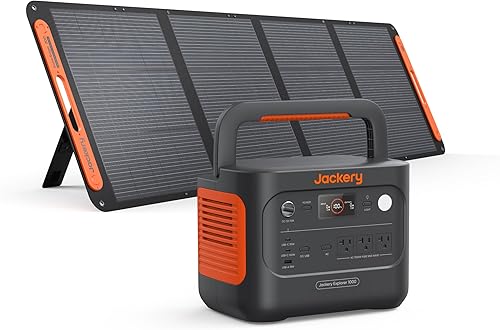
- 1,070Wh capacity
- 1,500W AC output
- Includes 200W solar panel
- 23.8 lb power station
This bundle pairs the Explorer 1000 v2 with a 200W panel for buyers who need both a power station and solar charging. The panel and station ship separately.
Pros
- Power station and 200W panel come as a bundle
- 1,070Wh capacity and 1,500W AC output
- Multiple USB, DC and AC ports
Cons
- Panel and power station ship separately
- A 200W panel charges to 80% in 6 hours under the stated conditions
The Explorer 1000 v2 bundle pairs a 1,070Wh station with a 200W panel. Jackery says that the 200W panel can charge the station to 80% in 6 hours, while the station defaults to a 1.7-hour AC charging mode and offers a one-hour emergency mode through the app.
Jackery notes that the station and panel ship separately. Factor that into your delivery plans, and check the exact contents and compatibility before ordering a bundle.
If you are choosing a new station and panel together, our guide to the best portable power station with solar panel compares that buying path. If you already own a power station, the best 200W solar panel for a power station guide can help you compare standalone panels.
What are the main alternatives?
A 200W third-party panel may offer a wider mix of connector adapters, while the Jackery panel keeps the setup centered on Jackery's own connections. Match the cable, voltage range and input limit to your station rather than choosing by wattage alone.
SOKIOVOLA N-Type 16BB 200W Portable Solar Panel: Best for broad connector options
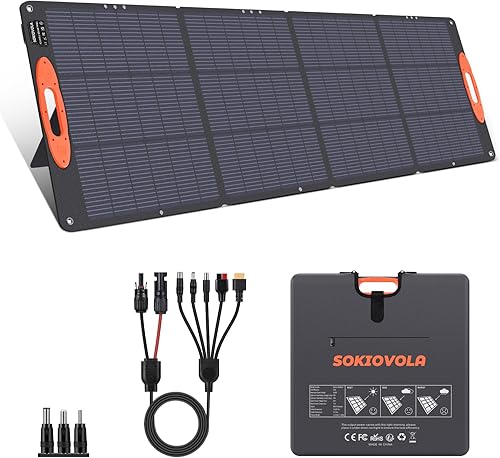
- 200W rated power
- MC4 to 5-in-1 cable
- 21 x 23 in folded size
- 16.3 lb
A foldable 200W alternative with a cable that includes several common power station connectors. Check your station's input limit and required connector before choosing it.
Pros
- Includes several connector types
- Folded size is 21 x 23 in
- IP68 rating
Cons
- Heavier than the Jackery panel
- Actual output varies with sunlight, angle and temperature
The SOKIOVOLA panel is a 200W foldable option with an MC4 to 5-in-1 cable that includes XT60, DC5521, DC7909, DC8020 and Anderson connectors. It weighs 16.3 lb and folds to 21 x 23 in, making it a bit heavier than the Jackery JS-200D.
SOKIOVOLA states a maximum conversion efficiency of 25% and an IP68 rating. Its product information also notes that power station input limits can restrict received power, so confirm both the connector and maximum input before pairing it with a station.
What should you check before buying?
Confirm three things first: the panel generation, the station connector and the station's solar input limit. That short check matters more than a broad “compatible with Jackery” label when you have an older unit or a mixed setup.
Look for the JS-200D model code if you want the version covered here. If you have a JS-200C, an older panel, or a power station with a different DC input, verify the exact combination with Jackery before connecting it.
Plan how you'll carry and position the panel. At 14.3 lb and a folded size of 24 x 21.7 x 1.8 in, it suits car camping and portable setups better than frequent long-distance carrying.
Keep the included cable's weather limitation in mind. The panel's IP68 rating does not make the cable weatherproof, so arrange the connection where it stays protected from rain and moisture.
Is the Jackery SolarSaga 200W worth choosing?
Choose the JS-200D if your station matches its DC connection and you want a 200W foldable panel with USB-A and USB-C ports. Choose a broad-connector alternative if adapter options are your priority, and check station limits before deciding.
The most important detail is generation fit: confirm JS-200D, compare the station input and account for the non-weatherproof cable. Once those match, decide whether 14.3 lb and the folded size work for your trips and storage space.
Frequently asked questions
What model is the Jackery SolarSaga 200W panel?
The panel in this review is the JS-200D, also identified as model number JS-200D. Check that code against your panel and power station before ordering a cable or replacement, since older SolarSaga 200W versions may use different connectors.
Does the SolarSaga 200W use DC8020 or DC7909?
The JS-200D has a DC8020 port, and its included 9.8 ft cable has DC8020 and DC7909 connectors, along with USB-A and USB-C. Match the connector at the power station end to its input port, and remember that the cable is not weatherproof.
Will the SolarSaga 200W work with every Jackery Explorer?
No single compatibility claim covers every Explorer generation. Jackery names the Explorer 1000 Plus, 2000 Pro, 2000 Plus and 3000 Pro as compatible, while the cable's DC8020 and DC7909 ends still make it important to check the exact station model and input.
Can the SolarSaga 200W charge devices directly?
Yes, the JS-200D has USB-A and USB-C ports for charging devices, as well as a DC8020 port for a power station connection. Direct charging depends on suitable sunlight and the device's charging needs, so keep the panel positioned toward the sun and the cable protected from weather.