What Are the Rubber Covers on Power Station Ports For?
Powerstation rubbers on ports help keep dust, dirt, and moisture away from unused outlets. Keep them closed during storage and transport, and replace a cover that no longer seals the port.
On this page (10 sections)
- Why do power station ports have rubber covers?
- What do the rubber covers protect against?
- Do rubber port covers make a power station waterproof?
- When should you close the rubber covers?
- Can you use a generator cover around a power station?
- How should you care for rubber port covers?
- What should you do if a rubber cover is missing?
- How do rubber covers relate to AC and DC ports?
- What is the best way to protect ports in dusty places?
- What are the rubber covers on power station ports for?
Powerstation rubbers on ports help keep unused outlets protected from dust, dirt, and moisture. They are small seals or flaps that close around the port opening when no cable is connected.
The covers protect the part of the power station where plugs, contacts, and connectors meet. They don't make the whole unit waterproof, and they don't allow safe use in rain unless the manufacturer specifically permits it.
Why do power station ports have rubber covers?
Rubber port covers close unused openings when the power station is stored, moved, or used around dust. This helps limit the material that can settle inside an AC outlet, USB port, DC socket, or other connection.
A cover also reduces accidental contact with the opening during transport. It is a barrier, not a power switch, surge protector, or repair part for a damaged port.
Port covers work best when they stay attached and close fully. If a flap hangs open, curls away from the housing, or has a split, the port has less protection even when the power station is switched off.
What do the rubber covers protect against?
The covers mainly help reduce exposure to dust, dirt, and small amounts of moisture around unused ports. This matters during storage in a garage, transport in a vehicle, or outdoor use in a dry environment.
They can also help keep loose grit away from the port opening. Sand, mud, and fine dust may make a plug harder to insert or prevent a clean connection.
The covers cannot stop water that reaches the rest of the power station. For broader weather planning, read How to Waterproof Your Portable Power Setup.
Do rubber port covers make a power station waterproof?
No, rubber port covers do not make a power station waterproof. They protect individual openings, while the battery housing, switches, display, vents, and cable connections still have their own limits.
Don't use a covered port as proof that the unit can sit in rain. Water can enter through an open port, a loose cover, a seam, a vent, or a cable connection.
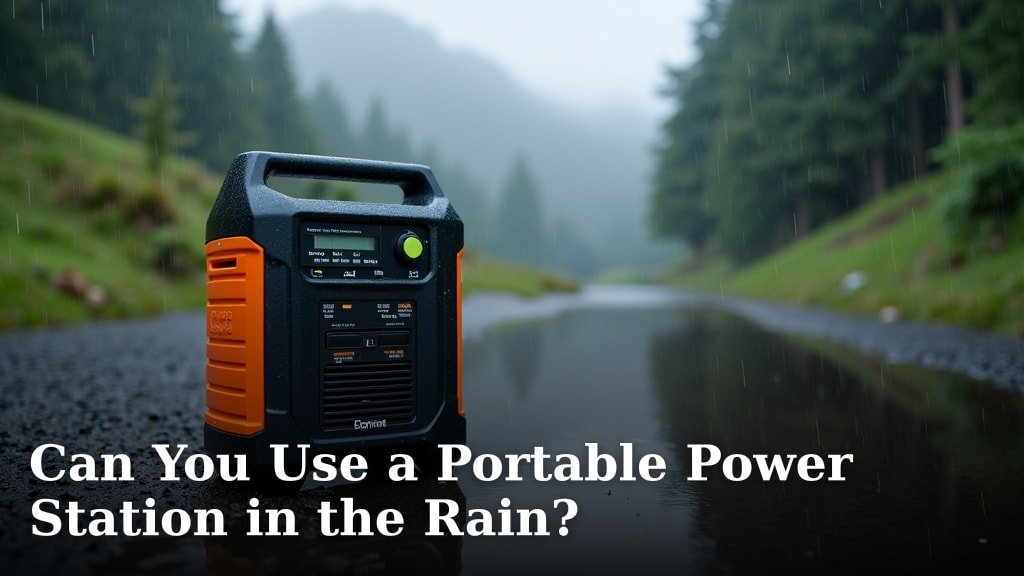
If you need weather protection during storage, compare the guidance in Can You Use a Portable Power Station in the Rain? and the options in best solar generator cover.
When should you close the rubber covers?
Close every unused port cover before storage and transport. For lithium battery shipping labels, see what UN3480 means on a power station.
During operation, open only the port that needs a cable and leave the other covers shut.
Before moving the power station, unplug accessories according to the manual and check that no cable remains trapped under a flap. Then close the port covers gently.
A cover should sit flat enough to reduce the opening without being stretched or twisted. If a connected cable prevents the cover from closing, don't force it against the plug.
Can you use a generator cover around a power station?
A generator cover can protect the wider power setup, but it isn't a replacement for the power station's rubber port covers. These products are designed for generators, so check dimensions, ventilation, cable routing, and the power station maker's instructions before using one nearby.
A cover can be useful when a generator and power station are part of the same outdoor setup. Keep any power station within its own operating limits, and never assume a generator cover makes an incompatible device safe.
When does the Westinghouse cover help?
The Westinghouse Outdoor Power Equipment WGen Generator Cover suits storage or transport of an open-frame generator rated up to 9500 running watts. Its 28.5 x 25 x 24.5 in dimensions and drawstring fit are useful when you need a cover around a matching generator that sits near a portable power station.
Westinghouse identifies this cover for its WGen2000, WGen3600v, WGen3600, WGen3600DF, WGen5500, WGen6000, WGen7500, WGen7500DF, WGen9500, and WGen9500DF portable generators. It is made from synthetic polyester fiber with high-density stitching.
This cover is for storage and transport, not for use while the generator is running. Measure the generator before choosing it, and keep the portable power station itself protected according to its own manual.
When does the Porch Shield cover help?
The Porch Shield Generator Cover for 5500-15000W suits readers who need a larger cover for a gas or inverter generator in the 5500W to 15000W range. Its 38 x 28 x 30 in size gives you a different fit target from the smaller Westinghouse cover.
The cover uses 600D polyester fabric, a water-resistant laminated undercoating, double stitching, taped seams, an elastic hem cord, and a bottom strap. Hook-and-loop access and two fabric stacks at one side support installation and ventilation.
Use it as a generator cover, not as a universal enclosure for a portable power station. Check the dimensions and leave the power station's own ports, vents, and controls accessible only as its manual allows.
When does the GenArmor cover help?
The GenArmor Generator Covers While Running is the only product here designed for use around a running generator. It is intended for most generators from 4000W to 13000W and includes a waterproof tarpaulin cover with a metal frame.
GenArmor describes a one-piece frame and fabric design, side flaps for ventilation and heat dissipation, and quick access to the power panel. The standard model is black and weighs 14 lb.
This cover is still not a port cover for a power station. Confirm the generator model against the product images, keep the power station within its own weather limits, and don't block vents or controls.
How should you care for rubber port covers?
Inspect the covers during normal setup and storage, and keep them seated without forcing them. Look for cracks, tears, loose attachment points, hardened rubber, or a flap that no longer rests over the opening.
Don't pull a cover sideways to make room for a thick plug. Open it only as far as needed, and avoid twisting the flap around a cable.
This post does not replace port cleaning instructions. For the cleaning process itself, follow How to Safely Clean Power Station Ports.
If a cover is dirty, use only the method allowed by the power station manual. Keep liquids away from open ports, and let the area dry fully before connecting equipment.
What should you do if a rubber cover is missing?
Treat a missing or damaged cover as a reason to improve storage protection and check the manual for a replacement. Keep the exposed port away from dust, rain, sand, and loose debris until the correct part is fitted.
Don't push foam, paper, cloth, or adhesive into the port. Those materials can leave fibers or residue, and they may interfere with the plug or contacts.
If the port itself is loose, bent, discolored, wet, or difficult to use, stop using it and contact the manufacturer. If you have an OUPES Mega 1, check its warranty coverage.
A replacement flap cannot fix damage inside the outlet.
How do rubber covers relate to AC and DC ports?
The cover protects the unused opening, while the port type determines what you can connect. AC outlets, USB ports, and DC outputs have different functions, voltage limits, and plug shapes.
Never choose a cable based only on the shape of the rubber flap. Check the labels and manual before connecting a device.
Our guide to AC vs. DC Output: Power Station Ports Explained explains why the port's label matters more than its cover.
What is the best way to protect ports in dusty places?
Keep unused covers closed, store the power station off the ground, and limit exposure to loose dust. A closed flap helps, but it cannot protect an open port during connection or stop dust from reaching other parts of the unit.
Use a dry storage area when possible, and avoid placing the power station beside soil, gravel, sawdust, or blowing debris. The guide to Using Power Stations in Dusty Environments covers the wider setup.
Choose a generator cover only when it matches the generator and the intended use. The Westinghouse and Porch Shield covers suit storage or transport, while the GenArmor model is designed around a compatible running generator.
What are the rubber covers on power station ports for?
They close unused openings and help reduce dust, dirt, and moisture exposure. Keep them closed during storage and transport, open only the port you need, and inspect the covers for damage.
Pick the right protection for the job: use the built-in rubber cover for each unused power station port, follow the power station manual for weather limits, and use a generator cover only for a matching generator setup.
Frequently asked questions
What are the rubber covers on power station ports for?
The rubber covers help block dust, dirt, and moisture from unused power station ports. Close them when an outlet is empty, especially during storage or transport.
They don't make a power station safe to use in wet conditions, and they don't replace the instructions in the owner's manual.
Should I remove the rubber port covers while using a power station?
Open only the cover for the port you need, and keep the other covers closed. Avoid folding a cover sharply or trapping it under a cable.
When you finish, unplug the device safely, inspect the opening, and close the cover without forcing it.
Can damaged rubber port covers be replaced?
Often, a damaged cover can be replaced, but the correct part depends on the power station model and port design. Contact the manufacturer or check the manual for approved parts.
Don't use tape, glue, or an improvised plug where it could enter the outlet or affect the connection.
Do rubber port covers make a power station waterproof?
No. Rubber covers reduce exposure at unused ports, but they don't turn a power station into a waterproof device.
Keep the unit within its stated use conditions, protect it from rain and splashes, and follow the manual before using it outdoors.