What Is Depth of Discharge in a Battery?
On this page (7 sections)
Depth of discharge, often called DoD, tells you how much energy you’ve used from your battery. It’s expressed as a percentage of the battery’s total capacity. Understanding your battery’s DoD is key to making it last longer.
When you use your battery, you’re lowering its charge level. The deeper you discharge it, the more you stress its internal components. Many battery types have a maximum DoD limit. Exceeding this limit can permanently shorten its lifespan. We found that keeping DoD lower often leads to better long-term performance.
- DoD measures how much of a battery’s total energy has been used.
- It’s shown as a percentage of the battery’s full capacity.
- Deeper discharges can reduce a battery’s lifespan.
- Most batteries have a recommended DoD limit.
- Keeping DoD within limits helps your battery last longer.
Ready to learn how to manage your battery’s depth of discharge effectively? Let’s break down what it means for you and your devices.
Understanding Your Battery’s Depth of Discharge
Depth of discharge, or DoD, is a simple concept that tells you how much of your battery’s total stored energy you’ve used. Think of it like a fuel gauge for your battery. If your battery is at 100% charge, its DoD is 0%. When you’ve used up half the energy, its DoD is 50%. When it’s completely empty, the DoD is 100%.
This percentage is really important. It directly impacts how long your battery will last. Every time you drain a battery, especially deeply, you’re putting a bit of stress on its internal parts. This wear and tear adds up over time.
How Depth of Discharge Affects Battery Life
The main reason DoD matters so much is its direct link to battery lifespan. Batteries are like tiny energy workhorses. They perform best when they aren’t pushed too hard, too often. Draining a battery completely is like asking someone to run a marathon every single day without a break.
Research has shown that the deeper the discharge, the shorter the battery’s overall life. This is especially true for certain types of batteries, like lead-acid and lithium-ion. For example, a battery that’s regularly discharged to 80% will likely last much longer than one that’s frequently drained to 100%.
Why Deep Discharges Hurt Batteries
When you discharge a battery, chemical reactions happen inside it. These reactions allow the battery to give up its stored energy. However, these same reactions can cause physical and chemical changes within the battery over time. These changes can degrade the battery’s ability to hold a charge or deliver power efficiently.
For instance, in lead-acid batteries, deep discharges can lead to sulfation. This is a process where lead sulfate crystals build up on the battery plates. If these crystals become too large, they can become permanent and reduce the battery’s capacity. We found that controlling this is key to their longevity.
Lithium-ion batteries, which power most of our modern gadgets, also suffer from deep discharges. Constantly taking them to 0% can stress the electrode materials. This can lead to a loss of lithium ions. This loss means the battery can’t store as much energy as it used to. It’s like losing bits of its memory.
Recommended Discharge Levels
Most battery manufacturers provide guidelines on their products’ optimal usage. These often include a recommended maximum Depth of Discharge. For many lithium-ion batteries used in consumer electronics, keeping the DoD below 80% is a common recommendation. This means not letting the battery go below 20% charge regularly.
Lead-acid batteries, often found in backup power systems or cars, have different recommendations. Many experts suggest limiting their discharge to 50% for optimal service life. Regularly draining them below this mark can significantly shorten their lifespan. Many guidelines point to this as a good first step for longevity (Marine & RV applications).
Calculating Depth of Discharge
Knowing how to calculate DoD can be very helpful. It allows you to monitor your battery usage and make informed decisions. The basic formula is quite straightforward.
You take the amount of energy used and divide it by the battery’s total capacity. Then, you multiply by 100 to get the percentage. Let’s say your battery has a capacity of 100 Ampere-hours (Ah). If you’ve used 30 Ah, your DoD is (30 Ah / 100 Ah) * 100 = 30%.
Practical Examples for You
Imagine you have a laptop with a battery that holds 60 Watt-hours (Wh). You use your laptop until it shows 10% battery life remaining. This means you’ve used 90% of its capacity. Your DoD is 90%. If you frequently do this, you might notice your laptop doesn’t hold a charge as long after a year or two.
Now consider a portable power station with a 1000 Wh capacity. You use it to run a fan for several hours and it drains down to 40% charge. You’ve used 60% of its capacity. This 60% DoD is much better for the battery’s long-term health than letting it hit 10%.
Some advanced battery management systems (BMS) can display the current DoD for you. This takes the guesswork out of it. You can simply check your device’s settings or a connected app. We found this feature to be incredibly useful for users.
How Different Battery Types Handle DoD
Not all batteries are created equal when it comes to depth of discharge. Some are much more forgiving than others. Understanding the type of battery you have is key to managing its DoD effectively.
Lead-Acid Batteries
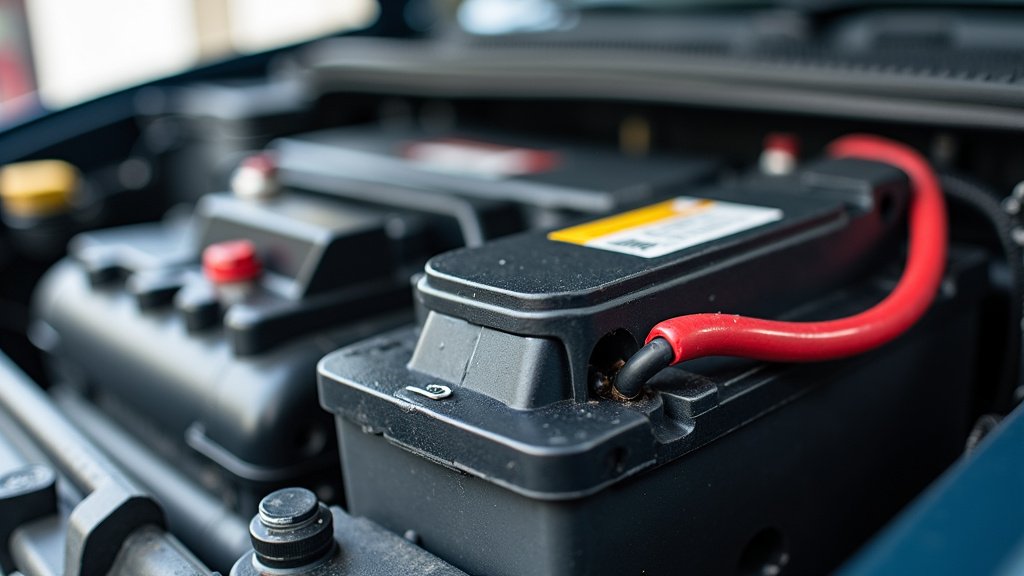
These are often found in older vehicles, boats, and as backup power for homes. They are generally less tolerant of deep discharges. For deep-cycle lead-acid batteries, it’s often recommended not to go below a 50% DoD. Doing so can significantly shorten their lifespan. Many sources suggest that regularly exceeding this 50% limit can cut the battery’s life in half.
Lithium-Ion Batteries (Li-ion)
This is the dominant technology in modern electronics like smartphones, laptops, and electric vehicles. Li-ion batteries are much more robust. They can typically handle deeper discharges better than lead-acid batteries. A DoD of 80% is often considered acceptable for daily use without severe degradation.
However, even with Li-ion, avoiding 100% discharge is still beneficial. Some research suggests that keeping the DoD in the 20% to 80% range can maximize the number of charge cycles. This means more years of reliable performance.
Other Battery Chemistries
There are many other battery types, each with its own DoD characteristics. For example, Nickel-Metal Hydride (NiMH) batteries, once common in rechargeable AA batteries, are fairly tolerant of varied discharges. However, they are less common now.
Each specific battery chemistry has unique benefits and drawbacks. The general rule remains: shallower discharges tend to lead to longer battery life across most types. We’ve seen this pattern hold true in various studies.
| Battery Type | Typical Recommended Max DoD | Impact of Deep Discharge |
|---|---|---|
| Lead-Acid (Deep Cycle) | 50% | Significant sulfation, reduced capacity, shorter lifespan |
| Lithium-Ion (Li-ion) | 80% | Stress on electrode materials, loss of capacity over time |
| Nickel-Cadmium (NiCd) | 80-90% | Prone to memory effect if not fully discharged occasionally |
| Nickel-Metal Hydride (NiMH) | 80-90% | Relatively good tolerance, but shallower is still better |
Tips for Managing Your Battery’s Depth of Discharge
Now that you understand what DoD is and why it’s important, you might be wondering how to manage it in your daily life. Thankfully, there are simple strategies you can use. These tips can help extend the life of your batteries.
Charge When You Can
Don’t wait until your battery is critically low to plug it in. If you have a chance to top it up, even for a short while, do it. For example, if your phone is at 60% and you know you’ll be out for a while, charging it to 80% or 90% is perfectly fine.
For many devices, keeping the battery between 20% and 80% is often considered the sweet spot. This range minimizes stress on the battery chemistry. Many modern devices even have software that can help optimize charging within this range to protect your battery.
Avoid Extreme Temperatures
Heat is a battery’s worst enemy. Leaving your devices in a hot car or charging them in direct sunlight can drastically shorten their lifespan. Cold temperatures can also affect battery performance, though usually temporarily.
Always try to store and charge your batteries at moderate room temperatures. This is typically between 68°F and 77°F (20°C to 25°C). We found that avoiding extreme heat is just as important as managing DoD.
Use Optimized Charging Features
Many newer smartphones and laptops come with built-in features designed to prolong battery life. These might be called “Optimized Battery Charging,” “Adaptive Charging,” or something similar. These features learn your charging habits and adjust the charging speed to reduce battery aging.
For instance, your phone might charge quickly to 80% and then slow down, only finishing the charge to 100% just before you typically wake up. This helps keep the battery out of a fully charged state for long periods, which reduces stress. You should definitely look for and enable these settings on your devices!
Here’s a quick checklist to help you remember the best practices:
- Try to keep your battery charged between 20% and 80%.
- Avoid letting your battery drop to 0% regularly.
- Don’t leave your device in extreme heat.
- Enable optimized charging features if available.
- Top up your battery when convenient, don’t wait for it to be low.
- Understand your specific battery type’s recommendations.
Conclusion
You’ve learned that your battery’s Depth of Discharge (DoD) is a simple percentage showing how much energy you’ve used. Deeper discharges put more strain on your battery’s internal components. This wear and tear can significantly shorten its lifespan over time. By understanding and managing your battery’s DoD, you can ensure it performs reliably for longer. Start by adopting the simple tips we discussed, like charging when convenient and enabling optimized charging features. You’ll see the difference in your battery’s longevity.
Frequently Asked Questions
Does charging my battery to 100% every time hurt it?
Yes, frequently charging your battery to 100% can contribute to its long-term degradation. Keeping it at a full charge for extended periods puts a bit more stress on the battery chemistry. Most manufacturers recommend keeping your battery between 20% and 80% for optimal health whenever possible.
Can I track my battery’s Depth of Discharge?
Many modern devices have built-in battery management systems that can track DoD for you. You might find this information in your device’s settings or a companion app. If your device doesn’t show it directly, you can estimate it by noting the percentage drop when you unplug it.
Is a 50% Depth of Discharge bad for a lithium-ion battery?
No, a 50% DoD is generally very good for a lithium-ion battery. Lithium-ion batteries can typically handle discharges up to 80% without significant issues. Consistently keeping your DoD around 50% will likely lead to an extended battery lifespan.
What happens if I ignore the recommended DoD limits?
If you frequently exceed your battery’s recommended DoD limits, you will likely experience a reduced overall lifespan. The battery will degrade faster, meaning it won’t hold a charge as long. For some battery types, like lead-acid, ignoring these limits can cause permanent damage like sulfation.
Are there ways to “reset” or “fix” a battery that’s been discharged too deeply?
Unfortunately, once a battery has been permanently degraded from deep discharges or other stress, you generally cannot “reset” it. The internal chemical and physical changes that reduce capacity are usually irreversible. The best approach is to prevent deep discharges from happening in the first place.