How to Protect a Power Station from Dew
For dew proofing a power station, keep it dry, ventilated, and protected from sudden temperature changes. Let a cold unit warm gradually in a dry place before use, and follow its manual if moisture may have entered.
On this page (7 sections)
- How do you prevent dew on a power station?
- Why can temperature changes cause condensation?
- Can a cover keep dew off without trapping moisture?
- What should you do before using a damp power station?
- Can you run a power station inside a covered enclosure?
- Does dew protection also protect against rain and dust?
- What is a safe dew-proofing routine?
For dew proofing a power station, keep it dry, ventilated, and protected from sudden temperature changes. Let a cold unit warm gradually in a dry place before use, and follow its manual if moisture may have entered.
Dew forms when moisture in the air condenses on cooler surfaces. Temperature changes can also create condensation inside equipment, so a dry outer case does not always mean the interior is dry.
How do you prevent dew on a power station?
Store and use the station under a dry, ventilated shelter, away from open sky, wet ground, and direct exposure to overnight dew. Keep it off damp grass or soil, and leave the airflow clear.
A roof or canopy can block falling dew and drizzle, but it does not make the area dry. Choose a spot with airflow and enough room to operate the unit as its manual requires.
A waterproof cover may help during storage, but don't assume a storage cover is safe while the station is running. Compare options in our solar generator cover guide.
Some covers can trap heat or block vents.
For a broader setup plan, see How to Waterproof Your Portable Power Setup. That guide can help you think through shelter and cable placement around the full setup.
Why can temperature changes cause condensation?
Condensation can form when warm, moist air meets a cooler surface. Bringing a cold power station into warm, humid air can create moisture on or inside it as the unit adjusts.
This can happen after storing a station in a cool vehicle overnight, then bringing it into a warm room. The reverse transition can also leave surfaces exposed to damp air as temperatures shift.
Give the unit time to reach room temperature in a dry place before powering or charging it. Don't use a heater, hair dryer, or other direct heat source to speed the process.
How long should a power station warm up?
Follow the manufacturer's manual for any waiting time or temperature limits. If it gives no specific interval, wait until the unit has adjusted to the indoor temperature and shows no visible moisture.
Avoid opening the casing to check for dampness. If moisture appears in a port, stop and contact the manufacturer rather than plugging in a cable to test it.
Can a cover keep dew off without trapping moisture?
A cover can shield a stored generator from dew, but it must match the equipment and use. Check the fit and whether the cover is meant for storage or operation before putting it on.
The Westinghouse Outdoor Power Equipment WGen Generator Cover fits open-frame generators rated up to 9500 running watts and is intended for transport or storage, not while running.
Check the dimensions and generator compatibility before choosing a cover. A generator cover is not a power-station enclosure, so use one only if it fits your equipment and follows its maker's guidance.
The Porch Shield Generator Cover for 5500-15000W measures 38 x 28 x 30 inches and is made from 600D polyester with a water-resistant laminated undercoating. Its design includes sealed seams and ventilated fabric sections.
Measure your equipment and confirm the cover's intended use before relying on it to shield a power station.
What should you do before using a damp power station?
Don't power or charge a unit that is wet or may have internal condensation. Move it to a dry area, disconnect cables if you can do so safely, and consult its manual or manufacturer.
Wipe external moisture with a dry, soft cloth if the manual allows it. Don't insert cloth, swabs, or tools into ports, and don't use compressed air unless the manufacturer recommends it.
Check port covers for damage or debris, but remember that rubber covers do not make every port waterproof. Our guide to powerstation rubbers on ports explains what those covers are for.
If moisture reached the unit's interior, visible drying may not be enough to make it safe. Keep it out of service until the manufacturer advises you what to do.
Can you run a power station inside a covered enclosure?
Only use an enclosure if the power station maker allows it and airflow stays unobstructed. A cover that is safe for storage can still be unsafe during operation.
The GenArmor Generator Covers While Running is a framed generator enclosure made with waterproof tarpaulin. Its side flaps can be raised for ventilation.
It is intended for compatible generators, not necessarily portable power stations. Confirm that your specific equipment is compatible and that the enclosure leaves its vents clear.
Never cover a power station in a way that blocks cooling vents, traps heat, or interferes with access to controls. If its fan makes unusual noise, see why a power station fan makes noise.
Follow the unit's instructions for outdoor use, operating temperature, and weather exposure.
Does dew protection also protect against rain and dust?
No, dew, rain, and dust call for different precautions. A shelter that blocks dew may not protect ports from rain, and a tight cover may collect dust or restrict airflow.
Don't treat a power station as weatherproof unless its manual states the limits. If rain is possible, stop using the unit outdoors unless its maker explicitly permits the conditions.
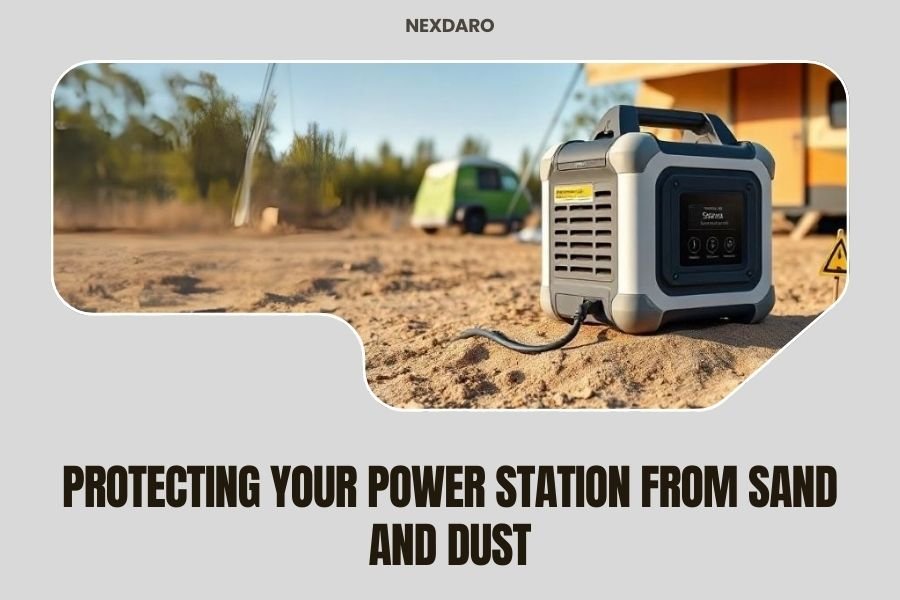
Read Can You Use a Portable Power Station in the Rain? before planning outdoor use. For dry but gritty environments, Protecting Your Power Station from Sand and Dust covers ways to reduce dust exposure.
What is a safe dew-proofing routine?
Keep the station sheltered, ventilated, and dry, then allow temperature transitions to happen gradually. That routine helps reduce moisture exposure without relying on a sealed cover.
Before leaving it overnight, check the forecast, choose a dry raised surface, and keep the station within its stated operating or storage limits. Remove wet covers and let them dry separately.
Before charging, inspect the case and ports for visible moisture. If you see dampness or suspect condensation inside, wait and get manufacturer guidance before use.
For dew proofing a power station, choose a simple dry shelter for normal overnight storage, and an approved ventilated enclosure only when the equipment is designed to work with one. If you also need surge protection, see How to Protect Power Stations from Surges and How Power Stations Protect Against Short Circuits.
Frequently asked questions
Can dew damage a portable power station?
Dew can leave moisture on a power station, and moisture that reaches electrical parts may cause problems. Keep the unit under a dry, ventilated shelter, avoid charging it when wet, and check its manual for safe operation after condensation or suspected water entry.
Should I cover a power station overnight?
A cover can help keep dew off the outside, but it must not block ventilation or trap damp air against the unit. Use only a cover or enclosure suited to the operating conditions, and follow the power station maker's guidance for airflow and storage.
What should I do if a power station is cold and damp?
Move it to a dry place and let it warm gradually before using or charging it. Don't apply direct heat or open the case.
If you see moisture in ports or suspect water reached the inside, stop using it and contact the manufacturer for instructions.