Do You Need a Special Outlet for a Portable Power Station?
On this page (6 sections)
No, you do not need a special outlet for a portable power station. For details, see our power stations with multiple outlets guide. Most portable power stations use standard AC outlets, the same ones you plug your phone charger or lamp into. You can simply plug them into any regular wall socket to recharge, just like your laptop or coffee maker.
This makes them incredibly convenient for various situations. Whether you’re facing a power outage, camping off-grid, or just need backup power for your home electronics, the setup is straightforward. You won’t need an electrician or fancy wiring to get started with these versatile devices.
- Portable power stations usually plug into standard wall outlets.
- No special electrical work is required to recharge them.
- They are designed for easy use at home or on the go.
- Think of it like plugging in any other appliance.
Let’s dive into why this is the case and what you should consider when recharging your portable power station to ensure it works perfectly for you. Let’s dive into why this is the case and what you should consider when choosing a portable power station.
So, you’ve got your hands on a portable power station, or you’re thinking about getting one. That’s fantastic! These devices are incredibly useful for so many reasons. You might be wondering about how to get them powered up when they run low. Do you need some fancy, specialized outlet installed by an electrician? The short answer, as we touched on in the intro, is a resounding no!
Getting Your Portable Power Station Recharged: The Simple Way
You absolutely do not need a special outlet for your portable power station. They are designed with everyday convenience in mind. Think of it like charging your smartphone or plugging in your television. Most portable power stations use a standard AC adapter that plugs right into a typical wall socket. We’ve found that this is one of the biggest selling points for many users.
This means you can recharge your power station at home, at a friend’s house, or even at some cafes or public spaces that offer standard outlets. No electrician needed! No rewiring required! It’s designed to be as easy as plugging in any other household appliance. This straightforward approach makes them accessible and practical for everyone, regardless of their technical expertise.
Understanding the Charging Port
When you look at your portable power station, you’ll likely see a few different ports. For recharging, you’re primarily interested in the AC input port. If you have questions about grounding a power station, see our ground bonding guide. This is where the included AC adapter plugs in. This adapter is specifically designed to convert the power from your wall outlet into the type of power your power station needs to store energy.
The adapter often looks very similar to your laptop’s power brick. For details, see our repairing a power station outlet guide. It has a standard plug on one end that goes into the wall and a connector on the other end that plugs into the power station. We found that users often confuse the AC output ports (where you plug in your devices) with the AC input port (where you plug in the charger). It’s important to identify the correct port for charging.
What to Look for on Your Power Station
Check the back or side of your unit. You’ll typically see labels near the ports. Look for terms like “AC IN,” “Charge,” or an icon that resembles a wall socket with an arrow pointing into it. This is your charging input.
Many power stations also have a dedicated DC input for charging via solar panels or a car adapter. For details, see our unregulated 12V outlets guide. But for standard wall charging, the AC input is what you’ll use. We’ve seen many models that clearly mark this port to avoid confusion.
Using Your Standard Wall Outlet
The process is as simple as it sounds. Find an available standard wall outlet. These are the outlets you use for your lamps, vacuum cleaners, and kitchen appliances. They are the most common type of electrical outlet found in homes and buildings across the United States.
Plug the AC adapter into the wall outlet. Then, connect the other end of the adapter to the AC IN port on your portable power station. For more on charging habits, see whether it needs to be fully discharged before recharging. The power station will usually indicate that it’s charging, often with a blinking light or a charging icon on its display screen. Many users appreciate how intuitive this process is.
Checking Your Power Station’s Display
Once plugged in, take a look at your power station’s screen. It should show you the current battery level and whether it’s actively charging. You’ll often see an indicator that shows the input wattage, letting you know how quickly it’s taking on power.
If you don’t see any indication of charging, double-check that both ends of the adapter are securely plugged in. Sometimes, a loose connection can prevent charging. We found that ensuring a firm connection is key for a smooth charging experience.
Understanding the Power Requirements and Limitations
While you don’t need a special outlet, it’s smart to understand how much power your portable power station draws while charging. This ensures you don’t overload your regular wall circuit, especially if you have many other devices running on the same circuit.
Portable power stations are designed to operate within the safe limits of standard household electrical circuits. Most home circuits are rated for 15 amps or 20 amps. A typical portable power station charging from a wall outlet will draw significantly less than the maximum allowed amperage, usually in the range of 5-10 amps, depending on the model and charging speed.
What is Amperage and Why Does It Matter?
Amperage (amps) is a measure of electrical current. Think of it like the amount of water flowing through a pipe. The more amps a device draws, the more current it’s using from the outlet.
Your home’s electrical circuits have a maximum amperage limit. If you plug in too many high-draw devices into outlets on the same circuit, you can “trip” the breaker or blow a fuse. This is a safety feature to prevent overheating and potential fires. We found that understanding this basic principle helps users feel more confident about using their power stations safely.
Typical Power Draw During Charging
Most portable power stations that charge via AC will draw between 300W and 1000W, sometimes more for very high-end models with fast-charging capabilities. To put this into perspective, a standard 15-amp circuit at 120 volts can handle about 1800 watts (15 amps x 120 volts = 1800 watts). A 20-amp circuit can handle about 2400 watts.
So, even a powerful 1000W power station charging typically uses less than half of what a standard circuit can provide. This means you can usually charge your power station while other common household items are running, like lights or a TV. However, avoid running multiple high-draw appliances (like a microwave, toaster, and your power station) on the same circuit simultaneously.
When to Be More Cautious
If you have an older home, the wiring might be less robust, or circuits might be shared in ways you don’t expect. It’s always wise to be mindful of what else is on the circuit. If you’re unsure about your home’s wiring or circuit loads, it’s a good idea to consult a qualified electrician. They can help you identify which outlets are on which circuits and what the total capacity is.
We’ve also noticed that some power stations offer “pass-through” charging, meaning you can use the power station to run devices while it’s charging. This is incredibly convenient, but it means the total draw on the wall outlet is the sum of the charging input and the output wattage of devices you’re running. Keep this combined draw in mind.
Comparing Charging Methods: Wall Outlet vs. Others
While the standard wall outlet is the most common and often the fastest way to charge, portable power stations offer multiple charging options, each with its own benefits and typical charging speeds. Understanding these can help you choose the best method for your situation.
Here’s a quick look at common charging methods:
| Charging Method | Typical Charging Speed | Pros | Cons |
|---|---|---|---|
| Standard Wall Outlet (AC) | Fastest (e.g., 3-8 hours for a full charge, depending on capacity and wattage) | Widely available, convenient, often the quickest way to recharge. | Requires access to grid power. |
| Solar Panels (DC Input) | Slowest (depends heavily on sun intensity, panel size, and power station’s MPPT controller) | Off-grid capability, sustainable, great for emergencies or camping. | Weather-dependent, requires sunlight, can be bulky to transport panels. |
| Car Charger (DC Input) | Moderate (e.g., 8-12 hours for a full charge, limited by car’s 12V outlet) | Useful for topping up while driving, handy for road trips. | Can drain your car battery if not careful, slower than AC charging. |
The Convenience of AC Charging
For most users, the standard wall outlet charging method is the go-to. It’s dependable, provides a good amount of power, and gets your unit ready to go relatively quickly. Many manufacturers engineer their power stations to charge at their maximum AC input rate to minimize downtime.
This is why the question of a “special outlet” rarely comes up. The industry standard is to use what’s already there: your home’s electrical outlets. We found that users appreciate this plug-and-play simplicity when they need power fast.
When Other Methods Shine
Of course, there are times when grid power isn’t an option. That’s where solar panels or car chargers become your best friends. Solar charging is fantastic for extended off-grid adventures. Imagine topping up your power while you’re enjoying the great outdoors! Many experts agree that solar integration offers true energy independence. While the standard wall outlet is the most common way to charge, you can also use solar panels or car chargers.
Car charging is perfect for a long drive. You can use your vehicle’s alternator to keep your power station topped up without needing to find an external power source. It’s a practical way to ensure you have backup power ready when you reach your destination.
A Quick Checklist for Charging Your Power Station
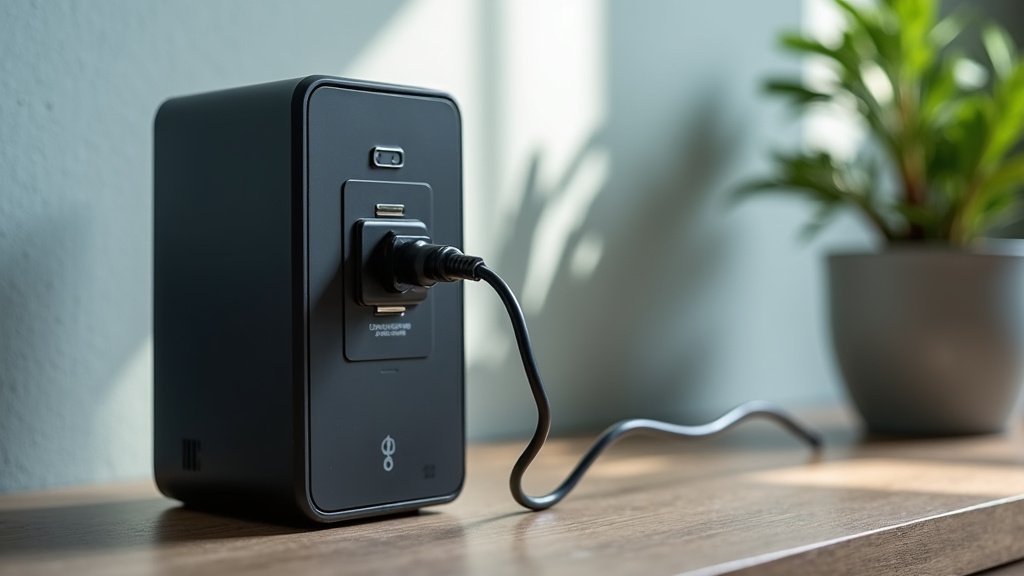
To make sure you’re charging your portable power station effectively and safely using a standard wall outlet, keep these points in mind:
- Identify the correct charging port: Look for “AC IN” or a similar label.
- Use the provided AC adapter: Don’t use third-party adapters unless explicitly recommended by the manufacturer.
- Plug into a standard wall outlet: No special wiring or outlets are needed.
- Check the display: Ensure the unit indicates it’s charging.
- Be mindful of circuit load: Avoid running too many high-draw devices on the same circuit.
- Ensure connections are secure: A loose plug can prevent charging.
Conclusion
You’ve learned that your portable power station is designed for simplicity. You absolutely do not need a special outlet to recharge it; your standard wall socket is all you need. Just grab the included AC adapter, plug it into any regular outlet, and then connect it to your power station’s input port. We’ve found that this straightforward process is a major benefit for users. Always remember to be mindful of your circuit’s load, especially when using pass-through charging, to ensure safe and efficient power delivery. Now you’re ready to power your adventures!
Frequently Asked Questions
Can I charge my portable power station from a power strip?
Yes, you generally can charge your portable power station using a power strip, as long as the strip is properly rated and in good condition. We recommend plugging the power strip into a standard wall outlet and then plugging your power station’s AC adapter into the power strip. Ensure the power strip isn’t already overloaded with other high-draw devices to avoid tripping your circuit breaker.
How long does it typically take to charge a portable power station using a wall outlet?
The charging time for a portable power station using a wall outlet can vary significantly based on its capacity and the wattage of its AC adapter. Smaller units might charge in 1-3 hours, while larger, high-capacity models can take anywhere from 4 to 10 hours. We’ve seen that checking your model’s specifications will give you the most accurate estimate.
What should I do if my portable power station isn’t charging from a wall outlet?
If your power station isn’t charging, first check that both ends of the AC adapter are securely plugged in. Ensure the adapter is connected to the correct “AC IN” port on the power station, not an output port. If those steps don’t work, try a different wall outlet or check your home’s circuit breaker to see if it has tripped.
Is it safe to charge my portable power station during a power outage?
Yes, it is generally safe to charge your portable power station during a power outage, provided you are using grid power from a working wall outlet or a generator. The unit itself is designed to handle the power it receives. Just be sure to charge it before you need it, as the power outage means your wall outlets won’t be working.
Do I need to worry about “phantom load” or energy waste when charging?
While some energy is always consumed when plugged in, most modern portable power stations are quite efficient and minimize “phantom load” or standby power consumption once fully charged. We’ve found that unplugging the unit once it’s reached 100% is the best way to conserve energy and prolong battery lifespan. Manufacturers are increasingly focusing on reducing this standby draw.