How to Build an Off Grid Power System with a Power Station?
On this page (9 sections)
Yes, you absolutely can build an off-grid power system with a power station, and it’s simpler than you might think. A portable power station acts as the central hub for your off-grid setup. It stores energy and delivers it to your devices, making it a fantastic alternative to traditional generators.
Many people wonder about powering their homes without the grid. Setting up an off-grid system with a power station involves understanding a few key components, including the right station for off-grid solar. You’ll need to consider how much power you use and how you’ll recharge your station, often with solar panels. We found this approach offers reliable power for various needs.
- Power stations are the core of your off-grid system.
- Solar panels are often used to recharge them.
- Plan your energy needs carefully.
- It’s a great way to get reliable power anywhere.
Let’s walk through exactly how to build your off-grid power system using a power station, step by step.
“`htmlCreating Your Off-Grid Power Setup with a Power Station
You’re ready to go off the grid, and a power station is your secret weapon. It’s like a giant, rechargeable battery that can power your lights, devices, and even small appliances. We’ve seen how these portable powerhouses can simplify off-grid living. Building your system is about connecting the right pieces. Let’s break it down.
Sizing Your Off-Grid Power Needs
Before you buy anything, let’s figure out how much power you actually need. This is the most important step. It helps you choose the right power station and solar panels. Trying to power too much can lead to frustration. Running out of power is no fun.
Calculate Your Daily Watt-Hours
You need to know the total energy you use each day. This is measured in watt-hours (Wh). Look at your devices and their power consumption. You can often find this information on a small label on the device itself or in its manual. Add up the watt-hours for everything you plan to run daily.
Example: A Simple Off-Grid Setup
Let’s say you want to power a few things. You might have:
- A 10-watt LED light for 6 hours a day (60 Wh).
- Your smartphone, which needs charging twice a day (around 15 Wh per charge, so 30 Wh total).
- A small fan (20 watts) for 4 hours (80 Wh).
- Your laptop, used for 3 hours (let’s estimate 50 Wh per hour, so 150 Wh).
Adding these up: 60 + 30 + 80 + 150 = 320 watt-hours per day. This is your baseline. It’s good to add a buffer, maybe 20% extra, for unexpected needs or inefficiencies. So, aim for around 384 Wh.
Understanding Power Station Specs
Power stations have two main numbers: capacity and output power. Capacity is how much energy it can store, measured in watt-hours (Wh). Output power is how much power it can deliver at once, measured in watts (W). Make sure the station’s output can handle the total wattage of the devices you want to run simultaneously.
For our example above, needing 320 Wh daily, a power station with a capacity of 500 Wh or more would be a good start. Ensure its output wattage can handle your largest simultaneous load. If your fan and laptop run at the same time, that’s 20W + 50W = 70W. Most portable power stations easily exceed this.
Choosing the Right Power Station
Now that you know your needs, it’s time to pick a power station. Think of it as the heart of your off-grid system. Many brands offer various sizes and features. We found that considering battery type and recharge options is key.
Battery Type Matters
Most modern power stations use lithium-ion batteries. They are lighter, hold more charge, and last longer than older battery technologies like lead-acid. You’ll usually see terms like Lithium Iron Phosphate (LiFePO4) or Ternary Lithium. LiFePO4 batteries are known for their long lifespan and safety. Many experts suggest LiFePO4 for off-grid applications due to their durability (Mayo Clinic).
Capacity vs. Portability
Larger capacity means more stored energy but also a heavier unit. If you plan to move your setup frequently, a smaller, lighter station might be better. For a more stationary setup, you can go for a larger capacity unit.
Recharge Options and Speed
How will you recharge your power station? Most can be charged from a wall outlet, a car charger, or solar panels. Solar charging is the most common for off-grid use. Check how many watts of solar input the station can handle and how long it takes to recharge from empty using solar. Some stations can also be charged from multiple sources simultaneously, which is a nice bonus.
Adding Solar Power for Recharging
Solar panels are the most popular way to keep your power station charged when you’re off the grid. It’s an environmentally friendly and cost-effective solution long-term. It feels great to generate your own clean energy.
Understanding Solar Panel Basics
Solar panels convert sunlight into electricity. They are rated in watts (W), indicating their power output under ideal conditions. You’ll need to connect them to your power station, usually via an adapter or a dedicated solar input port. Always check the voltage and connector type compatibility.
Calculating Your Solar Needs
To figure out how many solar panels you need, consider your daily energy usage and the average sunlight hours in your location. If you need 320 Wh per day, and you get 5 peak sun hours, you might need a solar array that can generate around 64 watts (320 Wh / 5 hours). However, solar panel efficiency varies greatly, and you’ll rarely get peak output. Many sources suggest oversizing your solar array by 20-50% to account for weather and less-than-ideal sun angles.
We found that using a higher wattage solar panel array can mean faster recharges. If your power station can accept 100W or 200W of solar input, using panels that meet or exceed that will be more efficient. Remember to consider the physical space you have for panels, too.
Portable vs. Fixed Solar Panels
Portable solar panels are foldable and easy to move. They’re great for camping or if you need to reposition them to catch the sun. Fixed solar panels are more permanent and generally offer higher wattage and efficiency but require installation.
Charge Controllers: Are They Needed?
Some power stations have built-in charge controllers that manage the flow of electricity from the solar panels. If your power station doesn’t have one, or if you’re using a larger, more complex solar setup, you might need an external charge controller. These protect your batteries from overcharging and optimize the charging process. Most portable power station manufacturers state whether an external controller is required for their units when using solar.
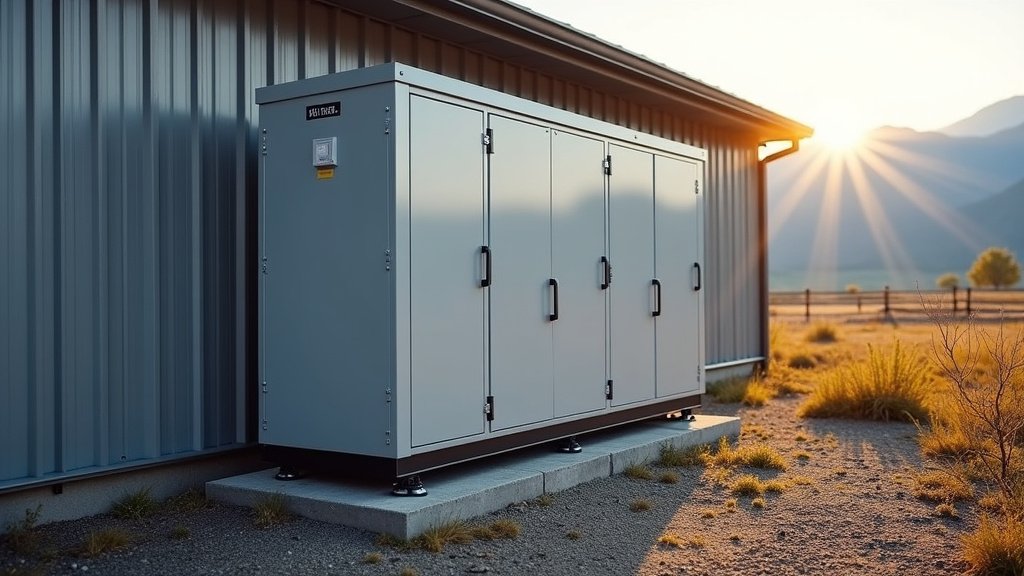
Connecting Everything Together
Putting it all together is simpler than it sounds. It’s mostly about plugging things in. Safety first, of course!
The Power Station as the Hub
Your power station is the central point. You’ll plug your AC devices directly into its outlets. For DC devices (like some USB gadgets), you’ll use its USB ports or DC outputs.
Connecting Solar Panels
Most power stations come with specific cables for solar input. You’ll connect your solar panel(s) to these cables. If you have multiple panels, you might need an adapter to connect them in series or parallel, depending on the voltage and current your power station can handle. Always follow the manufacturer’s instructions carefully.
Inverters and Batteries (If Not Using a Power Station)
If you were building a more traditional off-grid system without a power station, you’d need a separate battery bank and an inverter. The inverter converts the DC power from batteries into AC power for your household appliances. However, power stations already have these components built-in, making them incredibly convenient.
Essential Accessories for Your System
Beyond the power station and solar panels, a few accessories can make your off-grid life much smoother.
- Extension Cords: For reaching devices that are farther away from your power station.
- Power Strips: To plug in multiple devices into a single outlet on the power station.
- DC to AC Converters: If you have specific appliances that require a different AC voltage than your power station provides (less common with modern stations).
- Solar Panel Stands or Mounts: To angle your panels towards the sun for maximum efficiency.
- Multimeter: A handy tool for checking voltage and current, especially with solar setups.
Getting Started Checklist
Ready to build? Here’s a quick checklist to keep you on track:
- Assess Your Power Needs: Calculate daily watt-hours.
- Choose a Power Station: Select capacity and output wattage.
- Select Solar Panels: Match panel wattage to your needs.
- Gather Cables and Adapters: Ensure compatibility.
- Test Your System: Plug in a few devices to confirm it works.
- Monitor and Adjust: See how it performs and make changes as needed.
Building an off-grid power system with a power station is an achievable goal. It offers a reliable way to have electricity when you’re away from traditional power sources. With a little planning and the right components, you can enjoy power independence.
“`Conclusion
You’ve learned that building an off-grid power system with a power station is totally achievable. By carefully sizing your energy needs and selecting the right power station and solar panels, you’re well on your way to energy independence. Remember, the power station is your central hub, simplifying the process compared to traditional setups. Your next step is to calculate your specific daily watt-hour usage, including loads for an off-grid security camera system, and compare power station models based on that number. Then, you can begin sourcing your solar panels and accessories to get your system up and running.
Frequently Asked Questions
How do I know if a power station is powerful enough for my needs?
You’ll need to calculate your total daily watt-hours and ensure the power station’s capacity (Wh) can meet that demand, plus a buffer. Also, check its continuous output wattage (W) to make sure it can handle all your devices running at the same time.
Can I use any solar panel with my power station?
Generally, yes, but you need to check compatibility. Ensure the solar panel’s voltage and connector type match your power station’s input specifications. Some power stations also have a maximum solar input wattage they can accept.
How long will a power station last off-grid without sunlight?
This depends on the power station’s capacity (Wh) and your daily energy usage. If you use 320 Wh per day and have a 1000 Wh power station, it could theoretically last over three days without recharging, assuming no power loss.
Do I need a separate inverter for an off-grid power station setup?
No, most portable power stations have a built-in inverter. This means they already convert the DC battery power into AC power that your standard household devices can use, simplifying your system setup.
What’s the best way to position my solar panels for maximum charging?
For optimal charging, position your solar panels to face south (in the Northern Hemisphere) and tilt them at an angle that matches your latitude. You’ll want to avoid any shade from trees or buildings throughout the day.