Paxcess Power Station vs Jackery: Which Should You Choose? (November 2026)
Choose by the exact model and the loads you need to run: the Jackery Explorer 300 suits smaller devices, while the Explorer 1000 v2 offers more capacity and output. The supplied comparison details don’t identify a Paxcess model, so check its wattage, watt-hours and ports before deciding.
On this page (9 sections)
- Paxcess power station vs Jackery: what can you compare?
- Which Jackery size fits your devices?
- How should you match a station to appliances?
- How do charging and solar options compare?
- Which is easier to carry and store?
- What should you know about the charging cables?
- Which model should you choose for backup power?
- How should you care for a portable power station?
- Paxcess power station vs Jackery: which should you pick?
Choose by the exact model and the loads you need to run: the Jackery Explorer 300 suits smaller devices, while the Explorer 1000 v2 offers more capacity and output. The Paxcess power station vs Jackery choice depends on the Paxcess model’s specifications, which aren’t identified here, so compare its watt-hours, rated output and ports with the Jackery options below.
The Explorer 300 has 292Wh capacity and 300W rated output. The Explorer 1000 v2 steps up to 1070Wh and 1500W AC output, with a higher 3000W surge peak.
Those figures point to different uses, but they don’t establish which brand is better across every model. A smaller station is easier to carry, while a larger one can supply more devices for longer.
Start with your devices, then check the exact Paxcess model against the same requirements. Match capacity to runtime, output to total watts, and ports to the plugs you actually need.
 Best for lighter device loads
Jackery Explorer 300 Portable Power Station
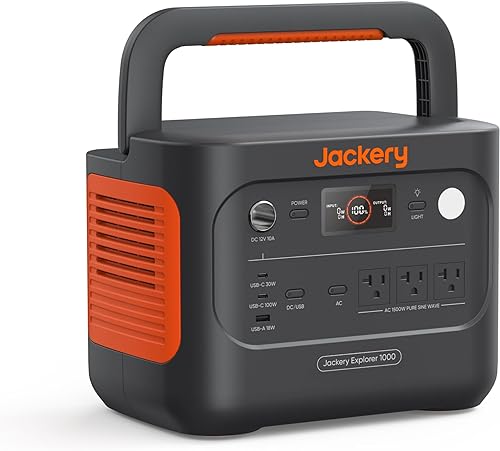 Best for higher output needs
Jackery Explorer 1000 v2 Portable Power Station
Paxcess power station vs Jackery: what can you compare?
Compare a specific Paxcess model with a specific Jackery model using capacity, output, ports, weight and recharge options. For another brand, compare ZeroKor portable power stations.
A brand name alone doesn’t tell you whether a station can run your devices or for how long.
The Jackery models in this comparison have defined capacity and output figures. The Explorer 300 is the smaller option at 292Wh and 300W, while the Explorer 1000 v2 offers 1070Wh and 1500W AC output.
The comparison details here don’t identify a Paxcess model or provide its specifications. Find the model number and check its label or manual for watt-hours, continuous output, surge output, port types and charging methods before treating it as a match.
For a wider brand shortlist, see our guide to the best portable power station brand. If you’ve narrowed your choice to Jackery, our best Jackery portable power station guide can help compare models within that range.
Which Jackery size fits your devices?
Choose the Explorer 300 for smaller loads and easier carrying; choose the Explorer 1000 v2 for a larger energy reserve and higher AC output. The right capacity depends on the wattage and runtime your devices require.
The Explorer 300 weighs 7.5 lb and measures 9.1 x 5.2 x 7.8 in. It has 2 AC outlets, a 100W USB-C PD port, 2 USB-A ports and a 120W car port.
The Explorer 1000 v2 weighs 23.8 lb and measures 12.87 x 8.82 x 9.72 in. It has 3 pure sine wave AC ports, 2 USB-C ports, 1 USB-A port and 1 DC car port.
Those differences affect both carrying and setup. The Explorer 300 is easier to move between a vehicle and a campsite, while the Explorer 1000 v2 is heavier but stores more energy and offers higher AC output.
What does 292Wh mean for the Explorer 300?
The Explorer 300’s 292Wh capacity is a limited energy budget, so estimate runtime from your device’s actual power draw. Jackery gives the formula as 300Wh × 0.85 ÷ device watts, which uses a rounded capacity figure and an allowance for conversion losses.
For example, Jackery’s formula estimates about 4.3 hours for a 60W device. Actual runtime can vary by use, and several connected devices draw from the same station.
Its 300W rated output is a separate limit from capacity. A device can be below 300W and still use the stored energy quickly if it runs for many hours.
What does 1070Wh and 1500W mean for the Explorer 1000 v2?
The Explorer 1000 v2 stores more energy and supports higher AC loads than the Explorer 300. Its 1070Wh capacity relates to potential runtime, while its 1500W AC output relates to the maximum power it can supply.
The 3000W surge peak is a brief startup allowance, not a promise that a 3000W device can run continuously. Check both the running draw and startup demand of any appliance before connecting it.
A fridge or other appliance may cycle on and off, so its average energy use can differ from its startup demand. Use the appliance label and manual to estimate both requirements, then leave room for uncertainty.
How should you match a station to appliances?
Add up the devices you may run at the same time, then check both total watts and estimated energy use. A station needs enough output for the combined load and enough watt-hours for the planned duration.
Write down each device’s rated watts and how many hours you expect to use it. For devices with a motor or compressor, check whether startup demand exceeds its running wattage.
Compare the total simultaneous load with the station’s rated output. For the Explorer 300, that total must stay under 300W; for the Explorer 1000 v2, use its 1500W AC output as the reference and check the manual for operating limits.
Then estimate energy use by multiplying watts by hours. Add the results for devices that will run during the same period, and plan for less usable energy than the battery’s full stated capacity.
If you want a step-by-step selection process, read how to choose the right portable power station. It helps connect appliance needs to output, capacity and portability.
How do charging and solar options compare?
Check the charging method you can use at home, in a vehicle or outdoors, and verify panel compatibility for the exact station. A solar panel is a separate purchase for both Jackery models discussed here.
The Explorer 300 can charge by AC adapter, car port or USB-C, and it can recharge from compatible Jackery solar panels. Jackery gives about 3.5 hours for a SolarSaga 100W panel, though solar conditions affect the time.
The Explorer 1000 v2 supports solar charging with Jackery panels only. Its emergency one-hour charge mode requires enabling that option in the Jackery App; its default full charge time is 1.7 hours to support battery health.
These are different charging details, so compare the method you’ll actually use. If you expect to rely on solar, confirm the panel connection and charging conditions before a trip rather than assuming any panel will work.
Both stations can charge devices while recharging, according to the Explorer 300 information. For either model, check the manual for the recommended charging setup and avoid leaving cables where they can be pulled or damaged.
Which is easier to carry and store?
The Explorer 300 is the lighter choice at 7.5 lb; the Explorer 1000 v2 trades portability for more capacity and output at 23.8 lb. Think through the whole trip, including lifting, storage and where the station will sit during use.
The Explorer 300’s compact dimensions and integrated handle suit a vehicle kit or campsite where you want to move the station by hand. Its lower capacity makes it a better fit for lighter device loads than for long appliance use.
The Explorer 1000 v2’s foldable handle and 1070Wh capacity suit plans where a larger reserve matters. At nearly 24 lb, it may be less convenient to carry far from a parked vehicle.
Before choosing a heavier station, consider where it will be stored and who will move it. Protect it in transit with a case for Jackery power stations.
A power station is only useful if you can place it near the devices and keep its vents and connections accessible as directed by the manual.
What should you know about the charging cables?
Choose a replacement cord only after matching the plug and model; the YEZriler and Ancable cords are accessories, not power stations. Their lengths and compatibility descriptions differ slightly.
The YEZriler cable is 6.6 ft long, orange and rated 15A at 125V. Its 14 AWG copper cable has a NEMA 5-15P to IEC C13 connection, and the description notes the C13 plug is marked 10A.
The Ancable cable is 6 ft long, orange and rated 15A at 125V, with a stated 1875W maximum load. It has 14 AWG wire and a grounded 3-prong plug.
Neither cord adds battery capacity or changes a power station’s output. Check the connector at both ends, the station’s charging instructions and the cord’s rating before using a replacement cable.
Which model should you choose for backup power?
Choose according to the essential devices and the time you need to power them, then verify the exact model’s limits. For another brand option, see ALLPOWERS portable power stations.
A power station can keep selected devices running, but it won’t automatically cover every home appliance.
The Explorer 300’s 292Wh capacity and 300W output may suit small electronics or short charging sessions. It is not a fit for loads above its rated output, and Jackery says the station shuts off if overloaded.
The Explorer 1000 v2’s 1070Wh capacity and 1500W AC output give you more room for compatible devices. That still doesn’t guarantee a particular appliance will run for a desired length of time, especially if it draws high power or has a large startup demand.
List the devices you need during an outage and decide which ones must run together. Check their wattage, likely hours of use and plug type, then compare those needs with the station manual.
How should you care for a portable power station?
Follow the exact model manual for charging, storage and temperature guidance, and inspect cables before use. Use a dry, stable place and keep connections free from strain.
Keep the station on a firm surface and protect it from moisture. Leave controls and ports accessible, and do not cover vents or use a damaged cord.
Set it up where air can move around it. Keep cables where they will not be pulled, stepped on or pinched, since a loose connection can interrupt charging and strain can wear the plug.
Recharge before a trip and confirm the display shows the expected charge level. Charge with no device loads attached so you can see whether it accepts power normally.
For longer storage, follow the maker directions for charge level and check interval. Store the station where you will notice the next check, and keep the manual and charging cable with it.
Inspect the body, handle, ports and cords before each use. Look for cracks, bent pins or a cable that feels loose at either end, and stop using anything damaged until you have checked the manual.
Clean the exterior with a dry cloth when needed. Keep dust away from vents and ports, and make sure the station is cool and dry before returning it to a case or vehicle kit.
Avoid leaving the station in direct sun or a very hot vehicle. Let it settle to a moderate temperature before charging or running devices.
When transporting it, keep it upright where possible and secure it so it cannot slide or fall. The Explorer 300 is lighter at 7.5 lb, while the Explorer 1000 v2 is heavier at 23.8 lb, so lift with the handle and plan the carry first.
Before a trip, test the exact setup you plan to use. Connect your devices, confirm the ports and wattage are correct, and check whether devices can charge while the station recharges only if your model manual allows that use.
Paxcess power station vs Jackery: which should you pick?
Pick the Explorer 300 if lower weight and smaller device loads matter most; pick the Explorer 1000 v2 if you need more capacity and higher AC output. Choose Paxcess only after matching those same figures on the exact model you are considering.
For another Jackery comparison, see Jackery vs Anker power station, Jackery vs Predator power station and Goal Zero vs Jackery power station. Start with the wattage and runtime you need, then let weight, ports and recharge options settle the choice.
The Explorer 300 suits a compact station for lighter loads. At 7.5 lb with 292Wh capacity and 300W rated output, it fits smaller devices and shorter use, provided their combined draw stays within that limit.
The Explorer 1000 v2 suits plans needing more stored energy. At 23.8 lb with 1070Wh capacity and 1500W AC output, it gives more room for higher loads, but it is less convenient to carry over long distances.
Neither Jackery station includes a solar panel in the details given here. If solar charging matters, check panel compatibility first, since the Explorer 1000 v2 is listed as compatible only with Jackery solar panels for solar charging.
For Paxcess, do not decide from the brand name alone. Find the exact model, then compare its watt-hours, continuous output, surge limit, port types, weight and charging methods with the Jackery figures above.
Also compare practical details that affect daily use. Check recharge time by the method you will use, whether devices can charge while the station recharges, and what is included in the box.
If a Paxcess model matches your device list on output and capacity, and its ports and recharge options suit your plans, it can be a fair alternative. If those details are missing or do not match, the Jackery model with the closer figures is the safer pick.
Use your own list as the final test. Add up the watts for devices you may run together, estimate the hours you need them, and choose the station that covers both numbers without relying on surge capacity for normal use.
Frequently asked questions
Is Paxcess or Jackery better for camping?
It depends on the exact station and the gear you plan to run. The Jackery Explorer 300 weighs 7.5 lb and has 292Wh capacity with 300W rated output; the Explorer 1000 v2 has 1070Wh and 1500W AC output, but weighs 23.8 lb.
Compare those limits with your device labels and trip needs.
How do I compare power station capacity?
Watt-hours describe stored energy, while watts describe the power a station can supply at a given moment. The Explorer 300 has 292Wh and 300W rated output; the Explorer 1000 v2 has 1070Wh and 1500W AC output.
For Paxcess, find both figures for the exact model.
Can the Jackery Explorer 300 run kitchen appliances?
The Explorer 300 is rated for 300W total output and shuts off if overloaded, so check the appliance’s running and startup wattage before connecting it. High-draw kitchen appliances may need a larger station.
Capacity also affects how long a load can run, even when its wattage is within the limit.
Do the Jackery power stations include a solar panel?
Neither solar panel is included with the Explorer 300 or Explorer 1000 v2 described here. The Explorer 300 can pair with Jackery panels, while the Explorer 1000 v2 is compatible only with Jackery solar panels for solar charging.
Check the station and panel connection requirements before buying them together.
Which Jackery charging cable should I choose?
Choose by connector match and needed reach. The YEZriler cord is 6.6 ft and names Jackery Explorer 1000, 1500, 2000 and 3000 models among its compatible stations; Ancable is 6 ft and names the same Explorer model numbers.
Confirm the exact model and cord connection first.


