Can You Run a Slow Cooker on Solar Panels?
Yes, you can run a slow cooker on solar panels with a battery, pure sine wave inverter, and enough stored energy. A 100W to 300W cooker may need several hundred watt-hours for one cooking session.
On this page (11 sections)
- How much solar power does a slow cooker need?
- Can solar panels power the cooker while it runs?
- What battery size should you choose?
- What inverter rating is safe for a slow cooker?
- Which solar panel size works best?
- Are small trickle-charging panels enough?
- Can a 20W panel run a slow cooker?
- How should you connect a slow cooker to solar power?
- How can you estimate charging time?
- What is the simplest off-grid setup?
- What should you check before using solar power for cooking?
Yes, you can run a slow cooker on solar panels, but the practical setup needs a battery and inverter between the panel and appliance. Solar panels do not produce steady power throughout the day, so stored energy keeps the cooker running when clouds pass or sunlight fades.
The key numbers are the slow cooker's watts, the cooking time, the battery's watt-hours, and the inverter's continuous output. A 100W to 300W cooker used for 6 hours can need roughly 600Wh to 1,800Wh before conversion losses.
How much solar power does a slow cooker need?
A slow cooker needs enough stored energy to cover its wattage multiplied by its cooking time. For example, a 200W cooker running for 6 hours uses about 1,200Wh before the inverter and battery consume their share.
Check the appliance label for its actual wattage. Some cookers use different power levels, so the average draw may be lower than the highest number, but you should size the system using the higher figure when planning for dependable operation.
A simple estimate is:
Watts × hours = watt-hours
Then add about 20% to 30% for inverter losses, battery reserve, and changing solar conditions. A 200W cooker used for 6 hours could therefore call for about 1,440Wh to 1,560Wh of usable battery capacity.
Can solar panels power the cooker while it runs?
Solar panels can replace part of the energy while the cooker runs, but a battery should handle the changing load. Direct panel-to-appliance wiring is unreliable because panel voltage and current change with clouds, shade, heat, and panel angle.
A power station makes the setup simpler because it combines a battery, inverter, charging controls, and appliance outlets in one unit. For a setup like this, what you can run off grid with a power station and solar panels explains how to match appliance loads to stored energy.
A 100W panel might produce close to its rated output only during strong, direct sun. If the cooker uses 200W, the battery still supplies the difference even when the panel is producing power.
What battery size should you choose?
Choose a battery based on the cooker’s full cooking time, not only its running wattage. A 500Wh battery may suit a short session with a low-wattage cooker, while a 1,000Wh or larger unit gives more room for longer cooking and conversion losses.
Battery chemistry and the power station's usable capacity also matter. The number printed on a battery does not always equal the energy available at the AC outlet, so leave reserve capacity instead of planning to drain the unit completely.
If you cook for 8 hours at 150W, the basic calculation is 1,200Wh. Adding a reserve means a battery around 1,500Wh may be more realistic than a 1,200Wh unit.
What inverter rating is safe for a slow cooker?
Use a pure sine wave inverter with a continuous rating above the slow cooker's wattage. A 300W cooker needs more than 300W of continuous inverter output, and a larger cooker may need a 500W or higher rating.
Do not size the inverter only by the solar panel's wattage. The panel charges the battery, while the inverter converts battery power into the AC power used by the cooker.
Look for a power station with an AC output that exceeds the appliance label. The inverter should also have suitable protection against overload, overheating, and low battery conditions.
Which solar panel size works best?
A 100W portable panel is a useful starting point for a small slow cooker system, but it may not refill a large battery during one day. Larger panels collect more energy when the power station accepts their input, while two smaller panels may offer more placement flexibility.
The ZOUPW 100W Portable Solar Panel for Power has a foldable design, a 23.5% efficiency claim, IP67 waterproof panel construction, and a 5-in-1 cable for several power station connections. Its built-in ports can also charge small USB devices, but the USB hub and connection cables should stay dry.
Check the power station's maximum solar input before connecting a panel. ZOUPW notes that a station with a 60W input limit will draw only up to 60W from this 100W panel.
For a broader comparison of panel options, see which solar panel type is better. Panel type matters, but the battery, controller, cable, and power station input limits matter just as much.
For cell-type comparisons, see the best monocrystalline solar panels.
Are small trickle-charging panels enough?
Small trickle panels are not enough to power a slow cooker. A 5W panel may maintain a small battery over time, but a cooker using 100W or more would consume energy far faster than that panel can replace it.
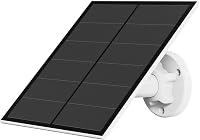
The YCTechCam 5W Solar Panel for Security Camera is designed for rechargeable 5V security cameras with Micro USB or USB-C connections. It includes a 360-degree adjustable wall bracket and has an IP65 waterproof rating, but it cannot charge cell phones and is not a slow-cooker power source.
A dashboard or maintenance panel also has a different job from a cooking panel. Read best dashboard solar panels for trickle charging if your goal is maintaining a vehicle battery rather than powering an appliance.
Can a 20W panel run a slow cooker?
A 20W panel cannot run a slow cooker while it operates. It can help maintain a compatible 12V battery over a long period, but a cooker will normally need many times more power.
The SOLPERK Solar Panel Kit 20W 12V Solar includes a 20W monocrystalline panel, a 10A smart MPPT controller, an adjustable bracket, and connection accessories. It is designed to charge and maintain compatible 12V rechargeable batteries such as LiFePO4, AGM, SLA, GEL, and other listed battery types.
The controller is useful for battery charging, but it does not turn a 20W panel into a high-wattage appliance supply. For slow cooking, pair a suitable battery with a correctly rated inverter and use a larger solar array to recharge it.
If a small panel seems to charge a battery slowly, why your Mighty Mule solar panel is charging very slowly covers common causes such as low sunlight, shade, poor positioning, and system limits.
How should you connect a slow cooker to solar power?
Use this order: solar panel, charge controller or power station solar input, battery, pure sine wave inverter, then slow cooker. A solar generator or power station combines most of these parts and usually provides an AC outlet for the cooker.
Keep the cooker on a stable, dry surface with clear space around the heating base. Use outdoor-rated cables where needed, protect connections from water, and follow the appliance and power station instructions.
Do not connect the cooker directly to a panel, battery, or charge controller unless the equipment is specifically designed for that appliance voltage and plug. A wrong connection can damage the cooker, battery, controller, or inverter.
How can you estimate charging time?
Charging time depends on panel output, sunlight, battery capacity, and the power station's input limit. A 100W panel will not add 100Wh every hour in real outdoor conditions because clouds, angle, heat, and conversion losses reduce the usable output.
For a rough estimate, divide the energy you need by the panel's average usable output. A 1,000Wh battery may need more than 10 hours of strong equivalent 100W production, often spread across more than one calendar day.
Place the panel in direct, unshaded sun and adjust its angle as the sun moves. Keep the panel clean and avoid routing it where a tree, roof edge, or vehicle shadow crosses the cells.
What is the simplest off-grid setup?
The simplest setup is a power station with enough battery capacity, an AC inverter rated above the slow cooker, and a solar panel that stays within the station's input limits. This reduces the number of separate parts and makes the connections easier to check.
Use the best portable power station with a solar panel as a starting point for comparing complete systems. Focus on usable watt-hours, continuous AC output, solar input range, and the correct cable for your panel.
For most readers, the decision is straightforward. Pick a small power station and panel for short cooking sessions with a low-wattage cooker, or choose a larger battery and solar array when you need several hours of cooking or repeated use during an outage.
What should you check before using solar power for cooking?
Check the cooker wattage, planned cooking hours, battery capacity, inverter rating, and solar input limit before turning anything on. Confirm that the battery chemistry, cables, plugs, and panel voltage suit the equipment together.
For panel voltage ratings such as 40V Voc solar panels, check the equipment's maximum input before connecting.
A 5W or 20W maintenance panel is not a cooking power source. A 100W panel can help recharge a compatible power station, but the battery must still carry the load when solar output drops.
The best setup for running a slow cooker on solar panels is a correctly sized battery system with a pure sine wave inverter and enough panel capacity to recharge it. Start with the appliance label, calculate watt-hours, and then compare the complete solar panel buying guide before choosing the panel.
Frequently asked questions
Can a 100W solar panel run a slow cooker?
A 100W panel can help run a slow cooker through a battery power station, but the panel alone is not enough for most cookers. Solar output changes with sun, shade, angle, and controller limits.
The battery supplies steady power while the cooker is operating, while the panel replaces some of that energy.
How big a battery do I need for a slow cooker?
A 500Wh battery may cover a short session with a low-wattage cooker, but a longer cook or a higher-wattage appliance needs more capacity. Allow extra room for inverter losses and battery reserve.
Check the cooker label, multiply watts by hours, then add about 20% to 30%.
What inverter do I need for a slow cooker?
Use a pure sine wave inverter with a continuous rating above the slow cooker's running wattage. A 300W cooker needs more than 300W of continuous capacity, while a larger cooker may need a 500W or higher inverter.
Check the appliance label before connecting it.
Can a small solar panel run a slow cooker directly?
No, a small panel should not connect directly to a slow cooker. Solar output rises and falls with the weather, while the appliance needs stable voltage.
Use a suitable battery, charge controller, and pure sine wave inverter, or use a power station designed for solar input.