How to Choose Solar Panels for Electric Wheelchairs
Choose solar panels for electric wheelchairs by matching the wheelchair battery and charger input first. Then compare panel wattage, controller protection, connectors, portability and the power source you plan to use.
On this page (6 sections)
- What should you check before buying solar panels for electric wheelchairs?
- Should you choose a fixed or portable panel?
- Which products can help with a solar charging setup?
- How can a portable power station make wheelchair charging easier?
- How should you position and care for the panel?
- What is the safest decision rule?
Solar panels for electric wheelchairs should match the wheelchair battery system and charging method before you compare wattage. The safest setup usually uses a compatible solar charge controller or portable power station between the panel and the wheelchair charger.
Start by checking the wheelchair battery voltage, chemistry and charger requirements. Then confirm that the panel output, connector and controller can work with that charging path.
This order matters because a panel does not charge a wheelchair in the same way a wall charger does. A wall charger is made for a specific battery and a specific input, while a panel produces power that changes with sunlight.
If you skip the matching step, you can end up with a panel that looks powerful but has no safe place to connect. You can also create a setup that overcharges, undercharges or asks a connector to carry power it was never meant to carry.
A better approach is to treat the wheelchair as part of a chain. The panel feeds a controller or a power station, and that middle part feeds the approved wheelchair charger.
That chain gives you control points. You can check voltage at each stage, confirm the battery chemistry setting, and stop the system if the numbers do not line up.
It also makes daily use easier to judge. You are not hoping a panel will guess what the battery needs, because a controller or station is doing the work of regulating the charge.
For many owners, the goal is not a fast full charge from solar alone. The more realistic goal is steady support, backup power or slower maintenance when the wheelchair is parked.
That mindset helps you choose the right size of panel. A small panel can be fine for maintenance, while a larger panel makes more sense when it feeds a power station.
Our Solar Panels: The Complete Buying Guide explains the same matching process across panel types and uses.
Use that guide alongside the notes on your own battery and charger. Together, they keep the choice practical, safe and tied to how you actually charge.
What should you check before buying solar panels for electric wheelchairs?
Check voltage, battery chemistry, charging current and connector type before choosing a panel. A panel that produces power is not automatically a safe replacement for the wheelchair's approved charger.
Find the battery label or manual and record:
- Battery voltage, such as 12V, 24V or another rating
- Battery chemistry, such as AGM, SLA, GEL or lithium
- Charger output voltage and current
- Connector shape and polarity
- Whether the charger accepts power from a battery station or inverter
Most wheelchair batteries need controlled charging. A panel's voltage can change with sunlight, angle and temperature, so direct connection can create an unsuitable charging condition.
For a battery-based setup, the charge controller must support the battery chemistry and voltage. A controller designed for a 12V rechargeable battery does not automatically suit a higher-voltage wheelchair system.
How much power do solar panels for electric wheelchairs need?
The needed panel wattage depends on how much energy the wheelchair uses and how quickly you need to replace it. A low-wattage panel may be useful for slow maintenance, while a higher-wattage panel can better support a power station during a travel day.
Estimate the energy needed from the battery's voltage and amp-hour rating if those figures are available. You also need to allow for sunlight losses, controller limits, cable losses and the power station's input limit.
Do not treat the panel's maximum wattage as a guaranteed daily output. Shade, clouds, panel angle and short daylight hours can reduce the energy available.
Should you choose a fixed or portable panel?
Choose a fixed kit for a regular charging location, and choose a portable panel when you need power away from home. A fixed panel can stay angled toward the sun, while a portable model can move with your travel plan.
A fixed kit may suit a garage, shed or covered parking area where the wheelchair battery or charging station remains in one place. Measure the mounting area and keep cables protected from foot traffic, wheels and water.
A portable panel suits trips, backup charging and temporary use. Look for a manageable folded size, suitable cable length and connectors that match your power station.
Our guide to portable solar panels for EV charging covers the same portability and input-limit questions for larger electric vehicles.
Which solar panel type is better for wheelchair charging?
The best panel type depends on where you charge and how often you move it. Monocrystalline panels can offer a practical balance of power and size, while foldable designs reduce setup time for travel.
A rigid panel may be easier to leave in one position, but its frame and mounting hardware add installation work. A foldable panel is easier to store, though its weight and folded dimensions still matter when you load a vehicle.
Compare the panel's maximum voltage with the controller or power station's solar input range. For a panel around 25V Voc, see solar panels with 25V Voc.
For more help comparing designs, see which solar panel type is better.
Which products can help with a solar charging setup?
These 3 products serve different roles. The SOLPERK is a low-power 12V battery-maintenance kit, the YCTechCam is a 5V camera panel rather than a wheelchair charger, and the ZOUPW is a higher-output portable panel intended for compatible power stations.
SOLPERK Solar Panel Kit 20W 12V Solar
The SOLPERK combines a 20W monocrystalline panel with a 10A MPPT controller. Its stated battery range includes LiFePO₄, lithium-ion, AGM, SLA, GEL, EFB and MF batteries, but a wheelchair owner still needs to confirm the exact battery and charging requirements.
The kit includes an adjustable mounting bracket, alligator clip, O-ring and mounting accessories. Its low-iron tempered glass surface and corrosion-resistant aluminum frame are designed for outdoor use, with an IP67 waterproof controller and a 360° adjustable bracket.
This option fits a fixed 12V charging or maintenance setup more than a fast wheelchair recharge. If your wheelchair battery system is not 12V, do not assume the controller can be used.
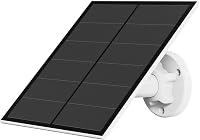
YCTechCam 5W Solar Panel for Security Camera
The YCTechCam produces 5W at 5V and uses a Micro USB port with a USB-C adapter. It includes a 360° adjustable wall bracket, screws bag and manual, plus a 9.8 ft cable.
This panel is designed for rechargeable security cameras with Micro USB or USB-C ports. It is not compatible with Arlo, Blink, Ring, Eufy, Google Nest or Kasa cameras, and it cannot charge cell phones.
It is not a general electric wheelchair charging panel. Its value in this comparison is showing why a familiar USB connector does not prove that a panel can safely charge a wheelchair battery.
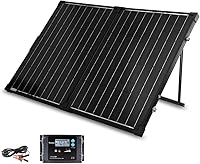
ZOUPW 100W Portable Solar Panel for Power
The ZOUPW uses 23.5% efficient monocrystalline cells and folds to 24.13 x 21.06 x 1.77 in. It weighs 9.5 lb and includes 2 adjustable kickstands for positioning.
Its 5-in-1 cable supports DC8020, XT60, Anderson, DC7909/8mm and DC5521 connections. The panel is rated for 100W maximum power and 24.3V maximum voltage, so you must check the power station's solar input limit before connecting it.
The built-in controller has 1 USB-C port and 2 USB-A ports, with overcurrent and short-circuit protection. The panel body has IP67 waterproofing, but the USB hub and connection cables need to stay dry.
This is best for portable power station charging, not direct wheelchair-battery connection. If your power station accepts the panel's voltage and connector, you can then use the wheelchair's approved charger from the station.
How can a portable power station make wheelchair charging easier?
A power station can make solar wheelchair charging simpler because it separates the panel from the wheelchair's approved charger. The panel charges the station, and the station supplies the charger through an output designed for that load.
Check the station's:
- Solar input voltage range
- Maximum solar input wattage
- AC output rating, if using the wheelchair's wall charger
- Battery capacity
- Connector and cable requirements
- Safety instructions for charging and discharging
Those checks keep the panel and the wheelchair from being treated as a direct pair. The station becomes the buffer, and its limits decide how much solar power it can take.
A 100W panel may not deliver 100W to a station if the station limits solar input to less. The ZOUPW product information gives this exact type of limitation as an example: a station with a 60W input limit can draw only 60W.
That limit is not a fault in the panel. It is the station protecting its own input and battery, and it means your charging time will follow the lower number.
Voltage range matters for the same reason. Even a panel with the right wattage can be wrong if its open-circuit voltage sits outside the range the station accepts.
Read the station manual for both numbers before you buy. Panel wattage is the headline, but input voltage and input wattage are the rules that decide if the pair will work.
AC output rating is the next check when you plan to use the wheelchair's wall charger. The charger needs an output that can support it without strain or frequent shutoffs.
Battery capacity changes the picture as well. A larger station can hold more solar energy for later, while a smaller one may fill quickly and then stop taking panel power.
Connector and cable needs should be confirmed early too. The right cable saves adapters, loose joints and the temptation to force a fit that was not planned.
Safety instructions for charging and discharging are not fine print here. They tell you how to run the station, how to store it and what to avoid while it is connected.
For daily use, this setup suits owners who already travel with a station or who want a clear middle step. It suits home backup, campsite charging and slow top-ups between outings.
It is less suited to someone who wants the lightest possible setup with no extra box to carry. In that case, weight, storage and extra cables all count against the station route.
The honest trade-off is added gear for added control. You gain a safer path to the approved charger, and you carry more equipment to make it work.
For a focused comparison of this setup, read Best Portable Power Station For Wheelchair Charging. It can help you compare the station as the middle component rather than treating the panel as the whole system.
How should you position and care for the panel?
Place the panel in clear, direct sunlight with the fewest shadows, and adjust its angle as the sun moves. Even a small shadow across part of a panel can reduce useful output.
Start with the clearest spot you can safely reach. A panel left in shade for part of the day will lose useful hours, even if the rest of the setup is correct.
Angle matters as much as location. Turn the panel toward the sun, then check it again later, because the best angle in the morning is rarely the best angle by afternoon.
Keep the panel stable on its stand or mount. A panel that slips, tips or flaps in wind will lose angle and may damage a cable or connector.
Keep the panel stable and protect cables from wheels, doors and standing water. Do not place a rigid panel where it can fall into a travel path, and do not leave a power station or USB hub exposed to rain unless its instructions allow it.
Cable routing is a daily safety habit. Keep cables out of wheel paths, door swings and puddles, and give them enough slack so a small move does not pull a plug loose.
For a fixed setup, secure the mount and check screws after weather changes. Storms, strong wind and heavy snow can shift a panel that was set well last week.
For a portable setup, set the panel where you can see it without crossing a busy path. You want easy access for adjusting angle, but not a trip hazard for anyone using the space.
Inspect connectors before every setup. Look for moisture, dirt, bent contacts or loose cable joints.
That quick check takes less than a minute and prevents a weak connection from wasting a sunny hour. Dry, clean and snug contacts help the controller or station do its job.
Disconnect the system before changing connectors or moving the panel. Making changes while power is flowing invites sparks, damaged contacts and confused readings.
Clean the panel with a soft, damp cloth when dirt blocks sunlight. Avoid harsh tools that could scratch the surface or damage a coating.
Dust, pollen and road grit can build up faster than you expect, especially on a panel that stays outside. A gentle clean restores light to the cells without risking the surface.
Avoid harsh tools, stiff brushes and household cleaners that are not approved for the panel. Scratches and residue can cut output and make future cleaning harder.
Waterproof ratings help, but they do not remove the need for care. Keep junction boxes, hubs and station connections dry where the maker asks for that protection.
Store a portable panel flat, folded and out of direct impacts when it is not in use. Weight is only part of the issue, and repeated knocks can harm cells, frames and cables.
A simple routine works best. Set up, check angle, check connectors, run the system, then tidy cables and store gear with care.
What is the safest decision rule?
Choose the SOLPERK when you have a compatible 12V battery and want a fixed 20W maintenance kit with a controller. Choose the ZOUPW when you need a foldable 100W panel for a compatible power station and can manage its 9.5 lb weight.
The SOLPERK suits a regular spot at home or in a shed. Its 20W panel and 10A MPPT controller point toward slow charging and maintenance for a 12V rechargeable battery, not a quick full recharge.
That fit depends on the battery. The kit lists support for LiFePO4, lithium-ion, AGM, SLA, GEL, EFB and MF types, but you still need to match your exact wheelchair battery and charger rules.
The ZOUPW suits travel and backup use. Its foldable 100W design, kickstands and 5-in-1 cable make it a better match for a power station when the station input and connector line up.
Its weight is part of the decision. At 9.5 lb, it is portable for many owners, but it is still a load to lift, carry and store in a vehicle.
Treat the YCTechCam as a 5V camera panel, not a wheelchair charging solution. For any option, confirm the wheelchair battery, charger, controller or power station input, connector and polarity before use.
That caution is the safest rule of all. Panel wattage can wait, while voltage, chemistry and connector fit decide if the setup is suitable.
If the wheelchair uses a higher-voltage system, the SOLPERK 12V route may not apply. In that case, a station and the approved charger are usually the cleaner path.
If you already own a station, check its solar input range and wattage limit first. A strong panel cannot push past those limits.
The best solar panels for electric wheelchairs are the ones that fit the complete charging chain, not simply the panel with the highest wattage.
Frequently asked questions
Can solar panels charge an electric wheelchair?
Solar panels can help charge an electric wheelchair when the panel, charge controller, battery voltage and wheelchair charger are compatible. A panel usually needs to feed a suitable battery or power station rather than connect directly to the wheelchair.
Confirm the charger input and battery chemistry before wiring anything.
What size solar panel do I need for an electric wheelchair?
The right solar panel size depends on the wheelchair battery capacity, charger input and available sunlight. A 20W panel may suit slow battery maintenance, while a 100W panel can provide more input to a compatible power station.
Wattage alone does not confirm charging compatibility.
Can I connect a solar panel directly to a wheelchair battery?
Do not connect a solar panel directly to an electric wheelchair battery unless the wheelchair or battery maker specifically approves that setup. Use a compatible solar charge controller or a properly matched power station, and verify voltage, battery chemistry, polarity and connector type first.
Are portable solar panels useful for wheelchair charging?
Portable solar panels can help when you have a compatible power station, enough sunlight and a safe way to position the panel. A foldable panel is easier to move than a fixed kit, but it can still be heavy and its output falls in shade or cloudy conditions.