Best 1000Wh Power Stations with Solar Panels: Top 8 Picks (November 2026)
The best 1000Wh power stations with solar panels include the Jackery Explorer 1000 v2 Portable Power Station for lightweight 1000Wh-class backup, the BROWEY 1600W for built-in solar charging, and the OUPES Mega 1 Portable Power Station 1024Wh for high-output expansion.
On this page (5 sections)
The best 1000Wh power station with solar panel for most buyers is the BROWEY 1600W, thanks to its 1024Wh capacity, 1600W output and built-in 40W solar panel. Choose Jackery for a lighter 1070Wh station, OUPES for higher output and expansion, or EBL for a separate 200W panel included with the station.
We compared capacity, output, solar bundle contents, portability, charging methods and backup features. The scores weigh those specs against the needs of someone shopping for a power station around 1000Wh.
A solar bundle can mean very different things. Some options include a separate panel, some have a panel built into the case, and some support solar charging but require you to buy the panel separately.
If you need a wider overview, start with our Best Solar Generator 2026 guide. For a broader comparison of portable stations and solar bundles, see Best Portable Power Station With Solar Panel.
Our picks at a glance
-
1
 Best for lightweight 1000Wh-class backup
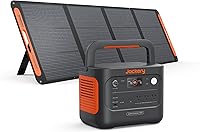
Jackery Explorer 1000 v2 Portable Power Station
9.6/10 our score
See it on Amazon -
2

-
3
 Best for high-output expansion
OUPES Mega 1 Portable Power Station 1024Wh
9.4/10 our score
See it on Amazon
- 4
 Check it
GRECELL 999Wh Solar Generator 1000W Portable Power
Best for many everyday ports - 5
 Check it
DaranEner Solar Generator with Panels Included
Best for a lighter solar bundle - 6
 Check it
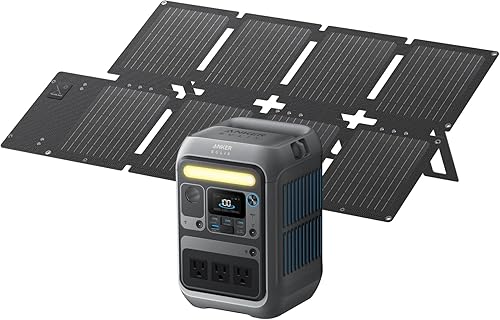
Anker SOLIX C300 Portable Power Station
Best for compact device charging - 7
 Check it
AFERIY Portable Power Station 1024Wh Solar Generator
Best for quiet high-output backup - 8
 Check it
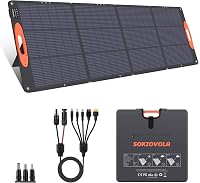
EBL 1000W Portable Power Station with 200W
Best for a complete 200W panel kit
Which 1000Wh power station with solar panel is best?
The BROWEY 1600W is the strongest overall choice when you want a station close to 1000Wh with solar built into the design. Its 1024Wh capacity and 1600W pure sine wave output give it more output headroom than the 1000W models here.
The Jackery Explorer 1000 v2 is the better fit when lower weight matters more than an included solar panel. The OUPES Mega 1 is stronger for high-demand equipment, while the EBL kit makes the most sense when a separate 200W panel is part of your plan.
Jackery Explorer 1000 v2 Portable Power Station: Best for lightweight 1000Wh-class backup
- 1070Wh capacity
- 1500W AC output
- 23.8 lb weight
- Solar panel optional
- LFP battery
The Jackery Explorer 1000 v2 gives you the highest listed capacity here with a 1500W output and a lighter build. Its solar panel is optional, and solar charging works only with Jackery solar panels.
Pros
- 1070Wh capacity
- 1500W output
- 23.8 lb weight
- 100W USB-C
Cons
- Solar panel not included
- Solar charging works only with Jackery panels
The Jackery Explorer 1000 v2 Portable Power Station is the lightest 1000Wh-class pick here at 23.8 lb. Its 1070Wh capacity is also the highest listed capacity in this roundup, giving you useful reserve for several smaller devices or selected larger loads.
Its 1500W AC output and 3000W surge peak create room for appliances with a higher startup demand. Jackery lists refrigerators, AC units and electric pots among possible uses, but you still need to compare each device's running and starting watts.
The station has three pure sine wave AC ports, two USB-C ports, one USB-A port and one DC car port. A 100W USB-C port helps when you want to charge a compatible device without using an AC adapter.
The main trade-off is the solar setup. The solar panel is not included, and solar charging works only with Jackery solar panels.
Its 1.7-hour default AC charging mode can be changed to 1-hour emergency charging through the Jackery App.
Choose Jackery if you want a portable 1070Wh station and already plan to use a compatible Jackery panel. It is less suitable if you want a panel in the box or need the highest AC output in this group.
BROWEY 1600W: Best for built-in solar charging
- 1024Wh capacity
- 1600W output
- 3200W peak
- Built-in 40W solar panel
- 8 ports
BROWEY is the clearest match for buyers who want solar built into the station. It includes a built-in 40W panel, 1024Wh capacity, 1600W output and accessories for several charging setups.
Pros
- Built-in solar panel
- 1600W output
- 1024Wh capacity
- Accessories included
Cons
- 40W built-in panel is modest for a 1024Wh battery
- Solar charging output depends on sunlight
BROWEY 1600W is the best match for the central idea of this roundup because it pairs 1024Wh capacity with a built-in 40W solar panel. You can also connect other solar panels, giving the setup more flexibility than a built-in panel alone.
Its 1600W pure sine wave output rises to 3200W peak. BROWEY lists refrigerators, CPAP machines and tools among possible uses, so this station fits buyers who need more than phone and laptop charging.
The unit has 8 ports, including AC, DC and 100W USB-C PD connections. It weighs 26 lb and measures 13.3 x 17.1 x 5.5 in, so plan for a wider, flatter storage space than you would for some upright stations.
The included contents include an AC adapter, car charger cable, DC output/input cable, accessory bag, user guide and 10 DC plug conversion adapters. BROWEY also lists a 3-hour charge to 80% when using the AC adapter and 100W PD USB-C port together.
Choose it when built-in solar and accessory flexibility matter most. The built-in 40W panel is useful for emergency charging, but a 1024Wh battery can take substantial time to refill from a small panel, especially in weak sunlight.
OUPES Mega 1 Portable Power Station 1024Wh: Best for high-output expansion
- 1024Wh capacity
- 2000W output
- 4500W surge
- Expandable to 5120Wh
- Under 20ms UPS
The OUPES Mega 1 suits demanding loads and future expansion. It has 1024Wh capacity, 2000W continuous output, a 4500W surge rating and support for up to two B2 Extra Batteries.
Pros
- 2000W output
- 4500W surge
- Expandable capacity
- 36-minute 0–80% AC charge
Cons
- Heavier than compact options
- Solar panel is not included
The OUPES Mega 1 Portable Power Station 1024Wh 2000W (4500W Surge) is the high-output choice. Its 2000W continuous output and 4500W surge rating give it the most power headroom in this group for demanding equipment.
OUPES lists a 36-minute AC charge from 0% to 80%, and a 26-minute 0% to 80% charge when AC and solar inputs work together. The station includes a built-in MPPT controller, but a solar panel is not included.
If you are considering wind input instead, see our guide to OUPES wind charging.
The Mega 1 can expand from 1024Wh to 5120Wh with up to two B2 Extra Batteries. That feature matters if your backup needs may grow, although expansion adds equipment and storage planning.
It also includes an under-20ms UPS function, Bluetooth app control, dual 100W USB-C PD ports, four QC3.0 USB-A ports and 12V DC outputs. At 27.8 lb, it is heavier than Jackery and not the smallest option here.
Choose OUPES for high-output backup, expansion or demanding loads. Choose a different model if you want a solar panel included or your priority is the lightest station.
GRECELL 999Wh Solar Generator 1000W Portable Power: Best for many everyday ports
- 999Wh capacity
- 1000W output
- 2000W surge
- 10-device charging
- Built-in MPPT
GRECELL works well for camping or backup use when you need many ways to connect devices. It includes AC, USB, DC, car and wireless charging options, while its solar panel is separate.
Pros
- 999Wh capacity
- 10-device charging
- Built-in MPPT
- Pure sine wave AC output
Cons
- 1000W output limit
- Solar panel is not included
The GRECELL 999Wh Solar Generator 1000W Portable Power is a sensible choice for everyday camping loads and mixed device charging. Its 999Wh capacity and 1000W pure sine wave output place it close to the target class without adding extra output headroom.
GRECELL gives you two AC sockets, three USB QC ports, one USB-C PD port, two 12V DC ports, a 12V cigarette lighter port and a wireless charging port. The station can support up to 10 electronics at once within its power limit.
Its built-in MPPT controller supports charging from an AC outlet, a solar panel or a car outlet. The solar panel is separate, so factor in panel size, cable routing and storage if you want regular off-grid charging.
For guidance on leaving panels connected, see continuous solar connection.
GRECELL includes an AC charging cable, car charging cable, 7909 solar charging cable, cable storage bag and user manual. The station weighs 23 lb and measures 11.6 x 7.91 x 7.91 in.
Choose GRECELL when port variety matters more than high output. Keep the AC output off when you are not using it, because the station can continue draining the battery even without another load.
DaranEner Solar Generator with Panels Included: Best for a lighter solar bundle
- 576Wh capacity
- 600W output
- 100W solar panel included
- 13.67 lb weight
- Pass-through charging
DaranEner is not a 1000Wh-class station, but its included 100W panel and 13.67 lb weight make it useful for lighter travel. It suits phones, laptops, lights and smaller camping loads.
Pros
- 100W panel included
- 13.67 lb weight
- 600W output
- Pass-through charging
Cons
- 576Wh capacity
- 600W output
DaranEner Solar Generator with Panels Included is a lighter alternative for buyers who do not need 1000Wh capacity. It has 576Wh capacity, 600W continuous output and a 100W solar panel included, with a total weight of 13.67 lb.
That smaller size suits camping, short road trips and light home backup. It is easier to move between a car, a tent and a tent storage area than a larger station.
The station offers 3 pure sine wave AC outlets, a 100W USB-C PD port, two USB-A ports and a 120W car socket. DaranEner lists laptops, CPAP machines, phones, cameras, mini-fridges, air pumps, heating pads and power tools among possible uses.
The 100W USB-C port matters for laptops, as it can charge many models without a separate AC adapter. The AC outlets cover larger household style devices, but only within the 600W limit.
Its 100W MPPT solar input, 130W AC charging and 120W car charging give you three ways to refill the station. Pass-through charging lets you run devices while the station recharges.
For setup, place the included panel in full sun and use the correct cable for the solar input. Check the connection before you rely on it for a trip or an outage.
The trade-off is clear: the battery and inverter are smaller than the main 1000Wh-class picks. Choose DaranEner for a lighter bundle with an included panel, not for long runtime on large appliances.
Anker SOLIX C300 Portable Power Station: Best for compact device charging
- 288Wh capacity
- 300W output
- 60W solar panel included
- 8 charging ports
- 25dB operation
The Anker SOLIX C300 is a compact alternative for personal electronics rather than long appliance runtime. The bundle includes a 60W solar panel and offers 300W output with 288Wh capacity.
Pros
- 60W panel included
- Compact design
- 140W USB-C
- 25dB operation
Cons
- 288Wh capacity
- 300W output
The Anker SOLIX C300 Portable Power Station with 60W Solar Panel, 288Wh, 300W suits personal electronics and short trips. Its 288Wh capacity and 300W output are far below the 1000Wh class, but its included 60W panel and compact design make the bundle easy to carry.
The compact size is a practical advantage for a day bag, a car seat or a small tent. It is easier to set up and pack away than a larger station with a separate panel.
The C300 has three AC ports, a 120W car socket, two 140W USB-C ports, one 15W USB-C port and one 12W USB-A port. It weighs 15.5 lb and measures 6.45 x 6.34 x 9.49 in.
That port mix suits phones, laptops, cameras and other personal devices at the same time. The AC ports allow a small household device, but the 300W output keeps the load modest.
Anker lists 25dB operation from 3.3 ft away. That quiet rating helps when the station is used near a tent, a bedroom or a work space.
Solar charging requires an 11–28V panel with an XT60 connector, and Anker warns that panels over 100W can cause a malfunction. The included 60W panel fits that limit, while a larger panel needs careful checking before use.
For care, keep the panel clean and point it toward the sun during the day. Charge the station before a trip so the smaller battery starts with a full reserve.
Choose it for phones, laptops, cameras and other personal devices. It is not the right pick when you need the longer appliance runtime associated with a 999Wh or 1024Wh station.
AFERIY Portable Power Station 1024Wh Solar Generator: Best for quiet high-output backup
- 1024Wh capacity
- 1800W output
- 4000+ cycles
- Under 30dB operation
- 13 ports
AFERIY gives you 1024Wh capacity and 1800W output in a station designed for home, camping and emergency use. The solar panel is optional, so you need to add one separately.
Pros
- 1800W output
- 1024Wh capacity
- 4000+ cycles
- Under 30dB in daily use
Cons
- Solar panel is optional
- 25.6 lb weight
AFERIY Portable Power Station 1024Wh Solar Generator 1800W,Fast Recharge is a strong choice for quiet, high-output backup. It provides 1024Wh capacity and 1800W output, with a listed 3600W peak rating.
The station has 4 pure sine wave AC outlets, a 140W PD USB-C port, two QC3.0 USB-A ports and 13 ports in total. AFERIY lists four charging methods: AC, solar, car and combined AC plus solar.
Its AC charging reaches 0–80% in 55 minutes, while combined AC and solar charging reaches 0–80% in 35 minutes. The unit weighs 25.6 lb and measures 13.77 x 8.62 x 10.35 in.
AFERIY lists under-30dB operation in most daily-use scenarios, plus app control and three LED modes: steady light, SOS signal and strobe flash. The solar panel is optional, and the included contents are the station, AC charging cable, MC4-XT60 cable and user manual.
Choose it when you want more output than the 1000W models and quiet operation. Add a compatible solar panel separately before planning regular off-grid charging.
EBL 1000W Portable Power Station with 200W: Best for a complete 200W panel kit
- 999Wh capacity
- 1000W output
- 200W panel included
- 23.5% panel efficiency
- Built-in MPPT
EBL is a practical bundle for buyers who want a 999Wh station and a larger included panel. Its 200W monocrystalline panel and built-in MPPT support off-grid charging for camping and backup use.
Pros
- 200W panel included
- 999Wh capacity
- 1000W output
- MPPT solar charging
Cons
- 1000W output limit
- Larger panel needs more setup space
The EBL 1000W Portable Power Station with 200W Portable Solar Panel is the most complete separate-panel bundle in this group. It combines 999Wh capacity, 1000W output and a 200W monocrystalline panel with a stated 23.5% panel efficiency.
The station has two AC sockets, a 60W USB-C PD port, three USB-A QC3.0 ports, a wireless charging pad, a 12V car port and two DC outputs. EBL describes it as able to charge up to 10 devices at once within the 1000W total power limit.
The built-in MPPT controller helps the station use variable solar input. The panel has a weather-resistant frame, compatible connectors and pre-drilled holes, which may help if you want a more fixed setup rather than a loose camping panel.
EBL includes a 200W solar panel, and the station is listed for camping, RV use, home backup, marine use and outdoor activities. The 200W panel needs more space to place and store than a smaller panel, but it can collect more energy in suitable sunlight.
Choose EBL when you want a 999Wh station and a substantial panel in one bundle. Its 1000W output is the main limit compared with BROWEY, OUPES and AFERIY.
How should you choose a 1000Wh solar power station?
Choose capacity first, then compare output, solar input and bundle contents. A station around 1000Wh gives you a useful middle ground, but its practical runtime depends on the device wattage and the station's conversion losses.
For a simple planning estimate, divide the station's usable watt-hours by the device's running watts. A 100W load needs much less energy per hour than a 1000W load, and devices with motors or heating elements may also have a higher startup demand.
Output rating matters when you want to run an appliance. The 1000W GRECELL and EBL models fit lighter loads, while Jackery, BROWEY, OUPES and AFERIY provide more headroom for higher-wattage equipment.
Solar input is a separate question from battery capacity. A large battery can store more energy, but a small panel may refill it slowly.
Compare the panel's rated wattage with the station's input limit, then allow for clouds, shade, heat and panel angle.
Our guide to the Best Solar Panel For Portable Power Station explains the panel side of the decision. If you are unsure about brands and assembly, read which solar generators are made in the usa before choosing a long-term backup setup.
Is a power station with solar panels included worth it?
A power station with solar panels included suits buyers who want one matched bundle and immediate off grid charging. EBL includes a separate 200W panel, DaranEner includes a 100W panel, Anker includes a 60W panel and BROWEY includes a built-in 40W panel.
A bundle removes guesswork about compatibility between the panel and the station. You can unpack the box, connect the supplied cable and start charging in suitable sunlight.
Panel wattage changes how fast the battery refills in the sun. A 200W panel can collect more energy than a 60W panel, but it needs more space to place, carry and store.
A station without a panel can still be better when output, capacity or brand compatibility matters more. Jackery supports only Jackery solar panels, while AFERIY, GRECELL and OUPES leave you to choose a panel separately.
Buying a panel separately gives you control over size, weight and placement. That flexibility can suit a fixed RV roof, a balcony, a workshop or a campsite with limited ground space.
Compare the included cables as well as panel wattage, and check the station input limit before adding a larger panel. A panel that exceeds the input limit can cause problems.
Think about where you will use the station most often. A built-in or small panel suits emergency top ups, while a larger separate panel suits regular off grid charging.
Also consider storage at home, since a large folding panel needs a dry, flat place and loose cables need care.
Read Is It Worth Buying a Power Station with Solar Panels Included? for the trade-offs between matched bundles and separate components.
How do you set up and care for a solar power station?
Place the panel in direct sunlight with as little shade as possible, then connect the correct cable to the station solar input. Keep the station dry, allow airflow around its vents and check that connectors are fully seated before charging.
Angle the panel toward the sun and adjust it as the light moves. A panel shaded by a tree, a tent or a vehicle wall can lose much of its output.
Use the display or app to watch input and output. If solar input falls, look for shade, dust, a poor panel angle or a loose cable connection.
Clean the panel with a soft cloth when dust builds up. Keep vents clear so the cooling fans can work without strain.
Keep AC output off when not in use. This reduces avoidable battery drain, especially when no device is connected.
Switch off DC, USB and lighting outputs you do not need. Small idle loads can add up over a long trip or an outage.
Check a device's running watts against the station rating before connecting it. Start larger appliances one at a time so you can see whether surge demand stays within the limit.
If a device will not start, unplug it and try a smaller load. Repeated overload attempts stress the inverter and can leave you without power.
Store the station and panel by the brand instructions. Keep cables dry, coil them without sharp bends and protect connectors from being crushed.
Before an outage or trip, charge the station, confirm the cables you need and test your main devices. A short test can reveal weak points before you depend on the setup.
Charge the battery before storage and top it up now and then when unused for long periods. Follow brand guidance, because a station left empty or full for months can lose health.
Test solar charging at home first to see real input in your local sun. That test shows how long a refill takes.
In wet or hot weather, keep the station under cover but not wrapped in bedding. Overheating and trapped moisture shorten the life of the battery and electronics.
Label cables for AC, car and solar use if you carry more than one set. Keep the station on a firm, level surface, and recheck the panel stand after wind.
Which 1000Wh power station with solar panel should you buy?
Choose the BROWEY 1600W if you want a 1024Wh station with solar built into the design. It pairs that capacity with 1600W output and a built-in 40W panel for emergency charging on the go.
Pick the Jackery Explorer 1000 v2 if a lighter 1070Wh station matters more and you will buy a compatible Jackery panel separately. At 23.8 lb, it is easier to carry than several larger options in this group.
Choose OUPES Mega 1 for 2000W output and expandable capacity. Its 4500W surge rating and support for added batteries suit demanding loads and future growth.
Pick EBL for a 999Wh station with a separate 200W panel included, or choose GRECELL when many everyday ports and a 1000W output fit your devices. Both suit lighter appliances.
DaranEner and Anker are better for lighter loads and easier carrying. DaranEner offers 576Wh with a 100W panel, while Anker offers 288Wh with a 60W panel.
AFERIY offers 1024Wh capacity, 1800W output and quiet operation, but you must add a solar panel separately. Its 13 ports and under-30dB operation suit home backup and campsite use.
For a fridge or other motor driven appliance, compare starting watts first. Higher surge headroom helps, yet the battery still limits total runtime.
If you want solar in the box, weigh panel size against carrying effort. BROWEY saves separate panel setup, while EBL gives you a larger panel that needs more space.
If you charge from the sun often, check the station input limit and panel voltage. That check matters more than battery size alone when you refill off grid.
For short trips, a smaller bundle can be the smarter buy. For home outages, match capacity and output to your combined load, and check storage space before you order.
Choose based on the devices you run most, not on the largest number in the list. Match capacity to runtime, output to your appliances and the solar setup to where you will actually use it.
Our top 3 picks at a glance
-
1
Best for lightweight 1000Wh-class backup
Jackery Explorer 1000 v2 Portable Power Station
9.6/10 our score
See it on Amazon -
2
-
3
Best for high-output expansion
OUPES Mega 1 Portable Power Station 1024Wh
9.4/10 our score
See it on Amazon
Frequently asked questions
What is the best 1000Wh power station with solar panel?
The BROWEY 1600W is the best 1000Wh power station with solar panel for buyers who want solar built into the unit. It has 1024Wh capacity, 1600W output and a built-in 40W panel.
Choose the EBL bundle if you prefer a separate 200W panel included in the box.
Does a 1000Wh power station include a solar panel?
Some do and some do not. BROWEY includes a built-in 40W panel, while EBL includes a separate 200W panel.
Jackery and AFERIY list solar charging but do not include a panel in the supplied contents.
Check the exact bundle before ordering.
How long will a 1000Wh power station run a device?
A 1000Wh station does not provide 1000Wh to every device because inverter losses and the device's power draw affect runtime. As a rough planning method, divide usable watt-hours by the device's watts, then allow for conversion loss and startup demand.
Can a 1000Wh power station run a refrigerator?
It may run a refrigerator if the station's continuous and surge ratings match the refrigerator's starting demand. OUPES offers 2000W continuous output and 4500W surge, while Jackery offers 1500W output.
Check the refrigerator's rated and starting watts first.
How many solar panels do you need for a 1000Wh station?
The answer depends on the station's solar input limit, panel voltage and sunlight. A 200W panel can collect more energy than a 100W panel in suitable sun, but the station may limit how much it accepts.
See our guide to how many solar panels for a 1000Wh station before buying.