6 Best Solar Panel Adapters for Jackery Power Stations (November 2026)
The best solar panel adapters for Jackery power stations include the Tonton 7-in-1 Solar Panel Connector Kit for connector flexibility, the Tonton 30FT 9M 8mm Extension Cable 14AWG for long panel runs, and the SolarEnz Solar ConnectorsTo DC7909 for simple 1 m connections.
On this page (5 sections)
The best solar panel adapter for Jackery power stations is the Tonton 7-in-1 Solar Panel Connector Kit because it covers 7 connector types and includes adjustable Anderson polarity. That flexibility matters when you already own a panel or a second power station and do not want a separate cable for each pairing.
A direct SolarEnz cable is easier when your connectors already match. COMeap and the 30 ft Tonton cable suit setups that need extra reach or more port options.
The right choice depends less on length alone and more on the exact plug on your panel and the exact input on your Jackery model. A Jackery adapter must match the panel connector, the station input, polarity and distance between the devices.
Those four details explain why similar looking adapters can behave differently. One may convert MC-4 to a DC input in a short run, while another simply extends a cable that already has the right panel connector.
Polarity deserves the same attention as plug shape. Different brands can wire connectors differently, so a cable that fits still needs its positive and negative sides checked before connection.
Cable length changes daily use more than many buyers expect. A short lead keeps the panel close, while a long extension lets you keep the station in shade and move the panel as the sun shifts.
Wire gauge matters too, especially on longer runs. Thicker copper carries current with less heat and loss, but it also makes the cable stiffer to coil and carry.
If you are still choosing the power station itself, compare these best Jackery power stations with solar panels first. That helps confirm input type and charging limits before length decides the purchase.
For panel matching, our guide to which solar panels work with Jackery power stations explains the checks that come before buying an adapter. Start there if you are unsure whether output, wattage and connector will suit your planned station.
Reading that guide first can save buying a versatile kit when a direct cable would do. It also makes the trade-offs in the picks that follow easier to judge.
Our picks at a glance
-
1
 Best for connector flexibility
Tonton 7-in-1 Solar Panel Connector Kit
9.7/10 our score
See it on Amazon -
2

-
3
 Best for simple 1 m connections
SolarEnz Solar ConnectorsTo DC7909
9.4/10 our score
See it on Amazon
- 4
 Check it
COMeap Solar Panel Adapter for Jackery
Best for multiple DC port options - 5
 Check it
COMeap 6FT 1.8M SAE to DC8mm Male
Best for SAE solar outputs - 6
 Check it
Kimbluth 30FT 14AWG DC7909 Solar Panel Extension
Best for shaded power-station placement
The best solar panel adapters for Jackery power stations
The best solar panel adapter for Jackery depends on the connector you have and how far the panel needs to sit from the power station. The Tonton 7-in-1 kit covers the widest range, while the long extension cables solve placement problems.
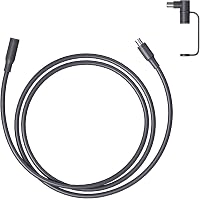
Tonton 7-in-1 Solar Panel Connector Kit: Best for connector flexibility
- 7 adapters
- 110 cm length
- 12AWG and 14AWG copper wire
- Anderson polarity adjustment
Seven connector options make this the most flexible choice when you need to match a solar panel with a Jackery or another power station. Its Anderson terminals can be adjusted by hand for polarity matching.
Pros
- 7 connector options
- Adjustable Anderson polarity
- 110 cm cable
Cons
- Shorter than the 30 ft extension cables
- Polarity still needs to be checked before connection
The Tonton 7-in-1 Solar Panel Connector Kit is the most flexible pick in this group. It includes adapters for DC7.90.9 mm, DC6.53.0 mm, DC5.52.1 mm, DC3.51.35 mm, Anderson, XT60 and DC8.0*2.0 mm connections.
Its 110 cm cable uses 12AWG and 14AWG copper wire. The stated maximum current is 10 A, and the cable is rated for up to 48 V DC.
This kit is useful when you own more than one portable power station or want to connect different solar panel types. The product data names Jackery, Goal Zero Yeti, EcoFlow River, Renogy, RV systems, RC batteries and other compatible devices.
The Anderson connector has a manual polarity adjustment. You can slide the retaining clip, swap the terminals and lock them again without tools.
Check polarity before connecting. The red wire is positive and the black wire is negative, but the solar panel and power station still need to be matched correctly.
Choose this kit when connector uncertainty is your main problem. Its trade-off is cable reach: 110 cm is much shorter than the 30 ft extension options.
Tonton 30FT 9M 8mm Extension Cable 14AWG: Best for long panel runs
- 30 ft length
- 14AWG copper wire
- DC7909 to DC8020 connection
- 80°C heat-resistant double PVC jacket
This cable gives you 30 ft of reach for placing a compatible solar panel away from a Jackery power station. It is an extension cable, so it normally connects to the panel's existing cable.
Pros
- 30 ft reach
- 14AWG wire
- Weather-resistant design
Cons
- May cause voltage drop and longer charging time
- Not compatible with Jackery Explorer 300
The Tonton 30FT 9M 8mm Extension Cable 14AWG is the best choice when your solar panel needs to sit well away from the Jackery power station. Its 30 ft length gives you more freedom to place the panel in direct sun while keeping the power station in a preferred location.
This is an extension cable, not a complete panel-to-station adapter for every setup. Tonton says to connect it to the cable that came with the solar panel, such as the original cable supplied with a Jackery SOGA 200 panel.
The cable uses 14AWG copper wire, a double PVC jacket and an 80°C heat rating. Its connectors are DC7909 and DC8020, and the stated maximum current is 15 A.
The long run is useful for camping, RV use, boating or a home charging area. It can also help place the power station away from heat while the panel remains outside.
The trade-off is electrical distance. Tonton notes that an extension may cause slight voltage drop and reduced power output, which can extend charging time.
Check the port before buying. This cable does not work with the Jackery Explorer 300.
SolarEnz Solar ConnectorsTo DC7909: Best for simple 1 m connections
- 1 m length
- 12AWG wire
- DC7909 and DC8020 connectors
- 30 A solar connector rating
SolarEnz keeps the connection short and direct for compatible solar panels and Jackery power stations. The included DC7909 and DC8020 options cover common 8 mm connection needs.
Pros
- Short direct cable
- 12AWG wire
- DC7909 and DC8020 included
Cons
- Only 1 m long
- The Explorer 1500 needs a DC7909-to-DC8020 adapter
SolarEnz is the simplest short-cable choice for a compatible Jackery connection. Its 1 m cable connects a solar connector to an 8 mm DC output and includes DC7909 and DC8020 connector formats.
The cable uses 12AWG wire and has a stated 30 A solar connector rating. Its named compatible power stations include Explorer 160, 240, 500 and 1000 models, along with GZ portable power stations.
This short length suits a panel placed close to the power station. It keeps the cable run easier to manage than a 30 ft extension, but it gives you less room to move the panel.
SolarEnz also describes use with 10W to 200W solar panels. Match the panel's voltage and wattage to the power station before making the connection.
For a Jackery Explorer 1500, the product information calls for a DC7909-to-DC8020 adapter. That makes port checking especially important for this pick.
Choose SolarEnz when you want a direct 1 m cable and already know the connector match. Choose a different product if you need a longer run or several adapter types.
COMeap Solar Panel Adapter for Jackery: Best for multiple DC port options
- 6 ft length
- MC-4 to DC 8mm connection
- DC8020 and DC5525 converters
- 12AWG and 14AWG wires
COMeap is a strong middle-length option for solar panels with MC-4 connectors. Its two converters help match Jackery power stations with DC8020 or DC5525 input ports.
Pros
- 6 ft reach
- Two converters
- Works with 10W to 300W solar panels
Cons
- Port size still needs confirmation
- More parts to store than a single adapter
The COMeap Solar Panel Adapter for Jackery is the best middle-length choice for panels with MC-4 connectors. Its 6 ft cable connects MC-4 to DC 8 mm and includes DC8020 and DC5525 converters.
The cable uses 12AWG and 14AWG wires with a double PVC jacket rated from 80°C to 105°C. COMeap describes it for solar panels from 10W to 300W, including foldable panels and SolarSaga 60W, 100W and 200W models.
The extra converters cover different DC input arrangements. COMeap names Jackery Explorer 1500, 2000, 3000 Pro, 600 Plus, 1000 Plus, 1000 v2, 2000 Pro and 2000 Plus among the models where the DC7909-to-DC8020 connector is used.
For a DC5.5*2.5 mm port, the DC7909-to-DC5525 converter is the relevant option. Confirm the physical input size before plugging in any adapter.
The 6 ft length gives more placement room than a 1 m cable without the full distance of a 30 ft extension. The trade-off is that you have more parts to identify and store.
Choose COMeap when MC-4 input and multiple DC converter options matter most.
COMeap 6FT 1.8M SAE to DC8mm Male: Best for SAE solar outputs
- 6 ft length
- 14AWG wire
- SAE polarity reverse adapter
- DC5525 and DC8020 converters
This adapter suits a solar setup that starts with an SAE connector. Its polarity reverse adapter and two DC converters give you more ways to match a compatible Jackery input.
Pros
- SAE connection
- Polarity reverse adapter
- DC5525 and DC8020 converters
Cons
- 14AWG wire instead of 12AWG
- The input port and polarity must be checked first
The COMeap 6FT 1.8M SAE to DC8mm Male Adapter suits solar setups that begin with an SAE connector. It includes a 6 ft SAE-to-DC 8 mm cable plus DC7909-to-DC8020 and DC7909-to-DC5525 converters.
Its 14AWG wire is rated for charging and connecting compatible 12–24 V devices. The cable has a double PVC jacket with an 80°C heat rating.
The polarity reverse adapter is the main reason to choose this model over a basic DC cable. Solar panel charger outlets can use different polarities, so the adapter gives you a way to switch polarity when required.
COMeap names Jackery Explorer 160, 240, 300, 500, 1000, 1500 and 2000 among its compatible power stations. It also names Goal Zero Yeti, Bluetti, Suaoki and Renogy power stations.
Use the DC7909-to-DC8020 converter for the Explorer 1500 or 2000 when that port is the correct match. Use the DC7909-to-DC5525 converter for a compatible DC5.5*2.5 mm port.
Choose this model for an SAE-based panel connection. Its trade-off is the smaller 14AWG wire compared with the 12AWG cable in the SolarEnz and Tonton 7-in-1 options.
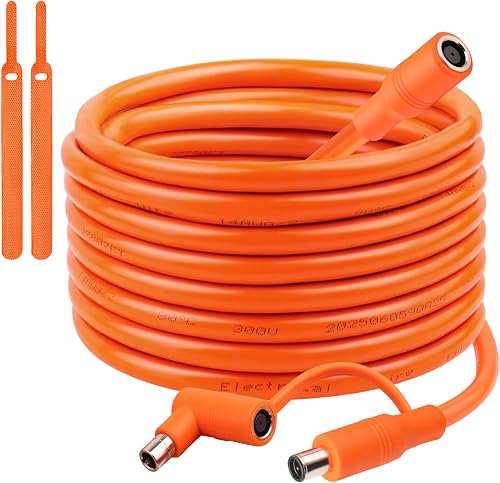
Kimbluth 30FT 14AWG DC7909 Solar Panel Extension: Best for shaded power-station placement
- 30 ft length
- 14AWG pure copper wire
- DC7909 female to DC7909/DC8020 male
- 15 A rating
Kimbluth gives a long DC7909 extension for separating a compatible Jackery power station from a solar panel. Its orange cable is easy to spot around a campsite, RV or home charging area.
Pros
- 30 ft reach
- 15 A rating
- Waterproof cable
Cons
- Designed as an extension cable
- Compatibility depends on DC7909 or DC8020 connections
The Kimbluth 30FT 14AWG DC7909 Solar Panel Extension Cable is best for separating a compatible Jackery power station from its panel. Its 30 ft length supports a panel in the sun while the power station stays in shade or another suitable position.
The cable has a DC7909 female connector for the solar panel and a DC7909/DC8020 male output for the power station. Kimbluth describes it for compatible panels rated up to 200W with DC7909 or DC8020 outputs.
Its 14AWG copper wire has a double PVC jacket and an 80°C heat rating. The stated rating is 15 A, and the orange cable is easier to spot around an RV, campsite or home charging area.
This is an extension cable, so it works best when the panel already has the needed connector cable. It is not the right choice when you need to convert an MC-4 or SAE panel directly.
The 30 ft reach gives similar placement freedom to the Tonton extension. Compare the connector details and panel rating before choosing between them.
Choose Kimbluth when you need a long DC7909/DC8020 extension and a visible orange cable. Its trade-off is narrower connector coverage than the 7-in-1 kit.
How to match a Jackery adapter to your solar panel
The correct Jackery adapter must match the panel connector, the station input and the polarity. Start with those three checks before comparing cable length or wire gauge.
Check the solar panel connector
Look for MC-4, DC7909, DC8020, SAE, XT60 or another connector type on the panel cable. A panel with MC-4 output needs an MC-4-to-DC adapter, while a panel with DC7909 output may need only a matching extension.
The Tonton 7-in-1 kit covers the widest mix here. COMeap's first adapter is built around MC-4, and its second model starts with SAE.
Check the Jackery input port
Jackery power stations do not all use the same solar input arrangement. The products here refer to DC8 mm, DC7909, DC8020 and DC5525 connections, so check the exact port on your model.
A connector can look close while still being the wrong size. Use the model's manual or Jackery's official support information to confirm the input before connecting a panel.
For more cable comparisons, see our guide to the best solar panel cables and adapters for Jackery.
Check polarity before connecting
Polarity is a safety check, not a minor detail. Different solar panel brands can wire connectors differently, and the Tonton kit specifically identifies red as positive and black as negative.
The COMeap SAE model includes a polarity reverse adapter. The Tonton 7-in-1 kit lets you adjust Anderson polarity by hand, but you still need to confirm the final connection before use.
How much cable length do you need?
A 1 m cable works when the panel and power station sit close together. It suits a tabletop test, balcony layout or small campsite setup in direct sun.
A 6 ft cable adds moderate placement room, while a 30 ft extension helps when shade, heat or layout separates the devices. That reach can mean strong sun instead of shade from a tent, vehicle or building.
Longer runs can add voltage drop. Tonton warns its 30 ft extension may reduce output and lengthen charging time, so use only as much cable as needed.
Every extra metre adds resistance, and the effect matters more when charging a larger station from a smaller panel. Length is not free.
A short cable is not always better. If it forces the panel into partial shade, loss from poor sunlight can outweigh loss from a longer run.
Think about where each part will live during the day. A station often works best in a cooler shaded spot, while the panel needs open sky and a stable position that can be angled as the sun moves.
A 1 m lead may work on a picnic table, but it will not reach from sunny ground to a station inside a tent or vehicle. A 6 ft lead gives a useful middle ground for home and RV use.
A 30 ft extension suits wider separations, such as a panel on a lawn and a station in a shaded patio. It also helps on a boat or large campsite where a dry spot for the station sits far from the best sun.
Wire gauge belongs in the same decision. The 12AWG cables are thicker than the 14AWG options, which can matter for current handling and heat, but thicker wire is heavier and less flexible.
Heat rating and jacket matter outdoors too. A double PVC jacket with an 80°C rating is aimed at sun, abrasion and warm conditions.
Choose the shortest length that gives your panel a genuinely sunny position. Extra length adds weight, storage hassle and potential loss without benefit.
For a general comparison of panel choices, read Best Portable Power Station With Solar Panel and Best Solar Panel For Portable Power Station. Those guides help judge panel size and station capacity first.
Once you know the pairing, length becomes practical rather than a guess. Match the connector first, then pick reach that fits shade, sun and walking space.
How to connect and care for the adapter
Set the panel in a stable sunny position before connecting it to the power station. Place it where it will not slip, tip or sit under a moving shadow.
Keep connectors clean and dry and avoid sharp bends. Do not pull the cable across a walking path, where it is easy to trip over and damage.
Use the correct converter for the station input. Do not force a connector into a port, and disconnect the system before changing parts or polarity.
If a plug needs force, it is probably the wrong size, converter or angle. That simple rule prevents most avoidable problems.
Check polarity before the first connection if you changed adapters. Red is positive and black is negative on the Tonton kit, but confirm the panel and station sides match.
Connect the panel side first and confirm the plug is seated. Then connect to the station and check that it recognises the input.
Avoid sharp bends near plugs, since repeated bending stresses wire and jacket. Keep the cable out of puddles and away from hot surfaces where you can.
Even a weatherproof cable benefits from being kept clean, dry and free from grit around connector ends. Coil it in wide loops when packing away.
Wide loops protect copper and jacket and keep plugs from being crushed under other gear. Store unused adapters in a dry place with ends protected from dirt.
A small bag helps for kits with several converters, since small parts are easy to lose. For a step-by-step setup, follow our guide on how to set up Jackery solar panels.
A careful setup takes only a few extra minutes. It makes charging more predictable, because a clean secure connection is easier to trust.
Which solar panel adapter for Jackery should you choose?
Choose the Tonton 7-in-1 kit if you need the best solar panel adapter for Jackery across several connector types. It is the pick for households or travellers who move between panels, stations and vehicles and do not want a different cable for each pairing.
Choose SolarEnz for a short 1 m connection, COMeap for MC-4 or SAE setups, and Tonton or Kimbluth for a 30 ft DC extension. Each of those choices solves a narrower problem than the 7-in-1 kit, and that focus can be a benefit when you already know your connectors.
The deciding rule is simple: match the connector and polarity first, then choose the shortest cable that gives your panel a safe position. Length, gauge and extra converters only matter after that basic match is clear.
If you already know your panel uses MC-4, start with the COMeap MC-4 model and its DC8020 or DC5525 converters. If your panel starts with SAE, the COMeap SAE model with its polarity reverse adapter is the more direct route.
If your panel already has the right DC7909 cable, an extension may be all you need. In that case, compare the Tonton and Kimbluth 30 ft options on connector fit, panel rating and how much reach your layout really requires.
If the input port is unclear, confirm the Jackery model before connecting any solar panel. Check the manual or official support information for the exact DC input size, and do not rely on a similar-looking plug.
That check also protects you on larger models. The SolarEnz listing notes that an Explorer 1500 needs a DC7909-to-DC8020 adapter, which shows why a model name alone is not enough.
For most buyers, the safest path is to list your panel connector, your Jackery input and the distance between them before you choose. Once those three facts are written down, the right adapter in this roundup usually becomes clear.
Our top 3 picks at a glance
-
1
Best for connector flexibility
Tonton 7-in-1 Solar Panel Connector Kit
9.7/10 our score
See it on Amazon -
2
-
3
Best for simple 1 m connections
SolarEnz Solar ConnectorsTo DC7909
9.4/10 our score
See it on Amazon
Frequently asked questions
What is the best solar panel adapter for Jackery power stations?
The Tonton 7-in-1 Solar Panel Connector Kit is the best solar panel adapter for Jackery power stations when connector flexibility matters. It has 7 adapter types and an adjustable Anderson polarity design.
Choose a direct DC7909 cable when your panel and Jackery input already match.
Choose a 30 ft extension when distance and panel placement matter more.
How do I choose a solar panel adapter for Jackery?
Start with the Jackery power station's solar input port, then check the solar panel's output connector and polarity. The products here use combinations of MC-4, DC7909, DC8020, DC5525, SAE, Anderson and XT60 connectors.
Cable length and wire gauge also matter.
A long extension gives more placement freedom but can add voltage drop and charging time.
Can I use a 30 ft extension cable with a Jackery power station?
Yes, if the cable's DC7909 or DC8020 connectors match the panel cable and Jackery input. Tonton and Kimbluth both offer 30 ft extension cables for compatible setups.
Tonton specifically notes that its extension may cause slight voltage drop and longer charging time.
It also does not work with the Jackery Explorer 300.
Do Jackery solar adapters need polarity checking?
Yes. Solar panel connectors from different brands can use different polarities, so check the positive and negative sides before connecting a panel to a Jackery power station.
The Tonton 7-in-1 kit has adjustable Anderson polarity, while the COMeap SAE model has a polarity reverse adapter.
These features still require careful matching before use.
What is the difference between DC7909 and DC8020?
DC7909 and DC8020 are different DC connector formats used by solar panels and portable power stations. An adapter or extension with both options can help match a panel cable to a compatible Jackery input.
Check the exact port size on your power station before choosing a cable.
Connector names alone are not enough if the physical fit differs.