6 Best Solar Panel Cables and Adapters for Jackery (November 2026)
The best Jackery solar panel cables and adapters include the Jackery DC Extension Cable for Solar Panel for standard Jackery setups, the Tonton 30FT 9M 8mm Extension Cable 14AWG for broad DC7909 coverage, and the Jackery DC Extension Cable Plus for Solar for long Jackery cable runs.
On this page (12 sections)
- How we chose the best Jackery solar panel cables
- Jackery solar panel cables compared
- 1. Jackery DC Extension Cable for Solar Panel: Best for standard Jackery setups
- 2. Tonton 30FT 9M 8mm Extension Cable 14AWG: Best for broad DC7909 coverage
- 3. Jackery DC Extension Cable Plus for Solar: Best for long Jackery cable runs
- 4. MOOKEERF 14AWG DC 8mm Extension Cable: Best for a 50-foot DC7909 run
- 5. Kimbluth 25FT Solar Panel Connectors to DC: Best for MC4-to-DC connections
- 6. Kimbluth 50FT 14AWG DC7909 Solar Panel Extension: Best for shaded power-station placement
- How do you match a Jackery solar panel cable?
- How long should a Jackery DC extension cable be?
- Can you use a long solar cable with Jackery?
- Verdict: which Jackery solar panel cable should you choose?
The best Jackery solar panel cable for most owners is the Jackery DC Extension Cable for Solar Panel, because its 16.4-foot length adds useful reach without making the setup difficult to route. Pick the Jackery DC Extension Cable Plus for a 32.8-foot Jackery-branded run, or choose a third-party DC7909 cable when your connector layout requires it.
Your first step is connector matching. Jackery systems can use different DC connections, and a cable that fits one Explorer or SolarSaga combination may not fit another.
If you're still checking panel and station combinations, start with our guide to which solar panels work with Jackery power stations. For a complete station and panel pairing, see the best Jackery power station solar panel options.
Our picks at a glance
-
1
 Best for standard Jackery setups
Jackery DC Extension Cable for Solar Panel
9.7/10 our score
See it on Amazon -
2
 Best for broad DC7909 coverage
Tonton 30FT 9M 8mm Extension Cable 14AWG
9.6/10 our score
See it on Amazon -
3
 Best for long Jackery cable runs
Jackery DC Extension Cable Plus for Solar
9.5/10 our score
See it on Amazon
- 4
 Check it
MOOKEERF 14AWG DC 8mm Extension Cable
Best for a 50-foot DC7909 run - 5
 Check it
Kimbluth 25FT Solar Panel Connectors to DC
Best for MC4-to-DC connections - 6
 Check it
Kimbluth 50FT 14AWG DC7909 Solar Panel Extension
Best for shaded power-station placement
How we chose the best Jackery solar panel cables
The best Jackery solar panel cables balance connector fit, useful reach, cable construction and the way you plan to place the panel. We compared those points with the needs behind searches for Jackery DC extension cables, solar panel-to-Jackery connectors and Jackery solar panel cords.
Cable length matters because a panel may need to sit in direct sun while the power station stays inside, under cover or in a cooler shaded location. However, extra length can add voltage drop and may reduce charging power.
Connector type matters just as much. The products here use Jackery-style DC connections, DC7909, DC8020 or solar connector-to-DC layouts.
Check your exact ports before ordering, especially with third-party cables.
Our score weighs specs, features and buyer feedback against what you're shopping for.
Jackery solar panel cables compared
The Jackery branded cables are the simplest starting point when you already use compatible Jackery equipment. You avoid much of the guesswork that comes with mixing brands and connector sizes.
The standard 16.4 foot cable suits modest separation between panel and station. The Plus version at 32.8 feet covers a wider gap without changing to a third party brand.
Third party cables offer longer reach or different connector layouts. They can bridge DC7909 and DC8020 ports, but they require more careful matching.
That matching matters more than length alone. A cable that is long enough will still fail if the plug size or polarity is wrong for your setup.
For many owners, the trade off is convenience against reach. Jackery cables keep the pairing straightforward, while third party options add placement freedom.
Check the exact panel output and station input before you decide. Then choose the shortest cable that lets the panel sit in good sun.
| Product | Best for | Length | Connector | Amperage | Our score |
|---|---|---|---|---|---|
| Jackery DC Extension Cable for Solar Panel | standard Jackery setups | 16.4 ft / 5 m | Male-to-female DC connector | 15 A | 9.7 |
| Tonton 30FT 9M 8mm Extension Cable 14AWG | broad DC7909 coverage | 30 ft / 9 m | DC7909 to DC8020 | 9.6 | |
| Jackery DC Extension Cable Plus for Solar | long Jackery cable runs | 32.8 ft / 10 m | DC8020 to 8020 | 9.5 | |
| MOOKEERF 14AWG DC 8mm Extension Cable | a 50-foot DC7909 run | 50 ft | DC7909 to DC8020 adapter | 9.2 | |
| Kimbluth 25FT Solar Panel Connectors to DC | MC4-to-DC connections | 25 ft | Solar connector to DC7909/DC8020 | 8.9 | |
| Kimbluth 50FT 14AWG DC7909 Solar Panel Extension | shaded power-station placement | 50 ft | DC7909 female to DC7909/DC8020 male | 8.6 |
1. Jackery DC Extension Cable for Solar Panel: Best for standard Jackery setups
Jackery DC Extension Cable for Solar Panel: Best for standard Jackery setups
- 16.4-foot length
- Male-to-female DC connector
- 15 A amperage
- 18 V
This 5 m Jackery cable is the simplest choice for adding reach to a compatible Jackery solar panel connection. Its PVC covering and copper core suit outdoor setups, but it should stay out of wet environments.
Pros
- Jackery-branded fit
- 16.4-foot reach
- 15 A rating
Cons
- Not compatible with SolarSaga 500X or SolarSaga 40W mini
- Not water resistant
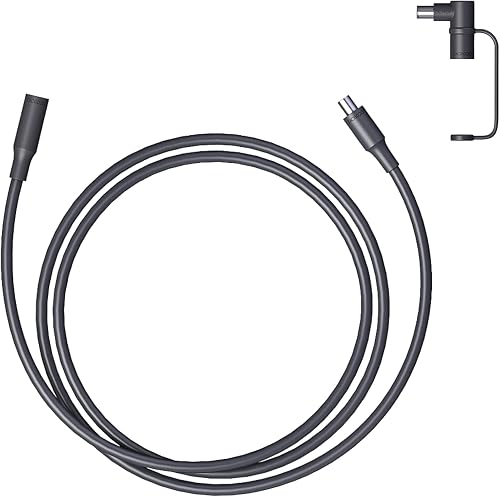
The Jackery DC Extension Cable for Solar Panel is the best fit for a standard compatible Jackery setup. Its 16.4-foot length gives you room to move a panel away from the power station without managing a very long cable.
The cable uses a male-to-female DC connector, carries a stated 15 A amperage and is rated at 18 V. Its PVC covering has a 0.28 in diameter, while the embedded copper core is intended to support stable current transmission.
This cable is particularly practical when you want a Jackery-branded extension for an outdoor arrangement. Keep it away from rainy or wet environments because it is not water resistant.
There are two clear exclusions. It does not work with the SolarSaga 500X or the SolarSaga 40W mini solar panel.
For the SolarSaga 500X, the product information points to an Anderson Extension Cable instead.
Choose this cable when 16.4 feet is enough and your panel is compatible. If you need more distance, compare it with the Jackery 10m DC Extension Cable Plus.
2. Tonton 30FT 9M 8mm Extension Cable 14AWG: Best for broad DC7909 coverage
Tonton 30FT 9M 8mm Extension Cable 14AWG: Best for broad DC7909 coverage
- 30-foot length
- 14AWG pure copper orange wire
- DC7909 to DC8020 connection
- 15 A maximum current
Tonton gives you 30 feet of reach and a DC7909 to DC8020 connection for many Jackery power stations. It is an extension cable, so you need the solar panel's original cable as part of the connection.
Pros
- Long reach
- Broad listed compatibility
- 14AWG wire
Cons
- Does not work with Jackery Explorer 300
- An extension can reduce power and extend charge time
Tonton is the strongest third-party choice when you need 30 feet of reach and a DC7909-to-DC8020 connection. Its 14AWG pure copper orange wire, double PVC jacket and stated 80°C heat resistance suit a longer outdoor cable route.
The important setup detail is that this is an extension cable, not a direct solar-panel cable. You connect it to the cable that came with the solar panel, such as the original cable supplied with a compatible Jackery panel.
Tonton lists compatibility with many Jackery Explorer models, including the Explorer 3000 Pro, 2000 Plus, 2000 Pro, 2000, 1500, 1000, 880, 700, 600 Plus, 550, 500, 290, 240 and 160. It specifically does not work with the Jackery Explorer 300.
The cable has a maximum current of 15 A and a stated maximum voltage of 12 V DC. Tonton also warns that an extension may cause slight voltage drop and reduced power output, which can lengthen charging time.
Pick Tonton when your panel and station use the listed DC7909 or DC8020 layout. If they do not, look at a dedicated solar panel adapter for Jackery instead.
3. Jackery DC Extension Cable Plus for Solar: Best for long Jackery cable runs
Jackery DC Extension Cable Plus for Solar: Best for long Jackery cable runs
- 32.8-foot length
- DC8020 to 8020 connectors
- 14AWG copper core
- 3-year manufacturer warranty
The Jackery Plus reaches 32.8 feet, making it the strongest fit here when the panel and power station need more separation. Its DC8020 connectors are designed for most Jackery solar panels.
Pros
- Longest Jackery-branded option
- 14AWG copper core
- Suitable for home, RV and outdoor setups
Cons
- Connector fit still needs checking
- Longer cable runs need careful placement
The Jackery DC Extension Cable Plus gives you the longest Jackery-branded reach in this group at 32.8 feet, or 10 m. That makes it useful when the panel needs a better sun angle or the station needs to remain farther away in a home, yard, RV or outdoor setup.
It uses DC8020-to-8020 connectors and a 14AWG copper core. The UL2464 PVC insulation and grey sheath are designed for regular cable handling, while the cable is described for home backup, balconies, yards, RV trips and outdoor scenarios.
The longer cable can simplify panel placement, but measure your route before buying. Extra cable should be kept clear of walkways, sharp edges and places where it can be pinched.
This option is a good match for owners who want a Jackery cable with more reach than the 16.4-foot model. Connector fit remains the deciding check because the cable is built around the DC8020 connection.
Choose it when a 10 m Jackery-branded cable solves your layout problem. For a longer third-party run, compare the 50-foot MOOKEERF and Kimbluth options below.
4. MOOKEERF 14AWG DC 8mm Extension Cable: Best for a 50-foot DC7909 run
MOOKEERF 14AWG DC 8mm Extension Cable: Best for a 50-foot DC7909 run
- 50-foot length
- 14AWG tinned copper core
- DC7909 to DC8020 adapter
- 80°C heat resistance
MOOKEERF is the choice when 50 feet matters more than a Jackery-branded cable. Its orange 14AWG cable and DC7909 to DC8020 adapter suit compatible Explorer 1500 and Explorer 2000 setups.
Pros
- Longest cable in this group
- Tinned copper core
- Flexible orange PVC cable
Cons
- Third-party connector fit must be confirmed
- Long cable runs need extra routing care
MOOKEERF is the best pick here when 50 feet is more important than a Jackery brand match. Its 14AWG tinned pure copper core is paired with a flexible orange PVC cable described as flame retardant and heat resistant to 80°C.
The cable includes a DC7909-to-DC8020 adapter and is described for compatible Jackery Explorer 1500 and Explorer 2000 power stations. It also lists compatibility with other portable power-station brands, but your Jackery connector still needs to match.
The orange color can make a long outdoor cable easier to spot. That helps with routing, but it does not remove the need to keep the cable away from sharp edges, vehicle tires and standing water.
MOOKEERF also describes a 1-year warranty and 24-hour customer service. Those details may matter if you want support for a third-party connection rather than a Jackery-branded cable.
Choose this cable for a long route where the DC7909-to-DC8020 adapter fits your equipment. For a cable made specifically around a solar connector input, consider the 25-foot Kimbluth cable.
5. Kimbluth 25FT Solar Panel Connectors to DC: Best for MC4-to-DC connections
Kimbluth 25FT Solar Panel Connectors to DC: Best for MC4-to-DC connections
- 25-foot length
- 12AWG and 14AWG wires
- DC7909/DC8020 adapter
- 80°C heat resistance
Kimbluth connects a solar-panel connector to an 8 mm DC input over 25 feet. It suits buyers who need a solar connector-to-DC path instead of a simple DC extension.
Pros
- Solar connector input
- 25-foot reach
- 12AWG and 14AWG construction
Cons
- Connector details need matching before use
- Third-party compatibility varies by Jackery model
The 25-foot Kimbluth cable suits a setup that starts with a solar-panel connector and ends at an 8 mm DC input. Its 12AWG and 14AWG wires give it a different role from a simple DC-to-DC extension cable.
The cable uses a DC7909/DC8020 adapter and has a tinned copper core. Kimbluth describes the PVC covering as flame retardant, flexible and heat resistant to 80°C, with an orange finish for visibility.
Its listed compatibility includes Jackery Explorer models such as the 160, 240, 500, 1000, 1500 and 2000, along with several other portable power stations. Check the exact model and connector arrangement before connecting it.
This cable is useful when your panel has a solar connector output and your station needs a DC7909 or DC8020 input. For a broader explanation of connector families, read solar panel compatibility: MC4, DC, and more.
Choose Kimbluth when the 25-foot length fits and your panel-side connector matches. If you need 50 feet, the longer Kimbluth cable below may be a better layout choice.
6. Kimbluth 50FT 14AWG DC7909 Solar Panel Extension: Best for shaded power-station placement
Kimbluth 50FT 14AWG DC7909 Solar Panel Extension: Best for shaded power-station placement
- 50-foot length
- 15 A rating
- DC7909 female to DC7909/DC8020 male
- Waterproof PVC jacket
This Kimbluth cable gives you 50 feet to place the panel in better sun while keeping a compatible power station cooler or shaded. Its connector layout is useful only when it matches both ends of your setup.
Pros
- 50-foot reach
- 15 A rating
- Waterproof PVC jacket
Cons
- Third-party compatibility must be checked
- Long runs may affect charging performance
This Kimbluth cable is the best fit when you need 50 feet to place the solar panel in better sun while keeping the power station cooler or shaded. It uses a DC7909 female connector for the panel side and a DC7909/DC8020 male connection for the power station side.
The cable has 14AWG pure copper wire, a double PVC jacket and a stated 15 A / 300 V rating. Its temperature range is listed as -15°C to 80°C, and the orange waterproof PVC jacket is described as resistant to UV damage and abrasion.
Kimbluth describes compatibility with compatible panels rated up to 200 W that use DC7909 or DC8020 output ports. That power limit and connector condition are important checks before you choose this long cable.
A 50-foot cable gives you more placement freedom, but it also needs more careful routing and storage. Coil it without tight bends and keep the connectors protected when the system is not in use.
Choose this model when its connector layout matches your panel and station and you need a long route. If you are using an MC4 solar connector, the 25-foot Kimbluth model is the closer match.
How do you match a Jackery solar panel cable?
Match the cable by checking four details: the solar panel output, the Jackery input, the connector size, and the power requirements. A cable can be long enough and still be wrong if its plug does not match the equipment.
DC7909 and DC8020 are common terms in this group, but they are not interchangeable by default. An adapter can bridge the two only when it is designed for the connection and the polarity suits your equipment.
For a simple Jackery setup, begin with a Jackery-branded cable. For a solar connector-to-DC setup, review how to use MC4 to DC adapters for solar charging.
Do not force a plug into a port. If the connector feels loose, stops partway or requires unusual pressure, disconnect it and confirm the model information.
How long should a Jackery DC extension cable be?
Use the shortest length that gives the panel good sun and keeps the power station in a safe location. The 16.4 foot Jackery cable works for modest separation, while the 30 foot, 32.8 foot and 50 foot choices support more flexible placement.
Your route will decide which size fits best. A panel on a balcony may need only a short run to a station kept inside the door.
A panel across a yard or along an RV may need 30 feet or more. In that case, the extra length is useful rather than wasteful.
Longer is not always better. More cable can create voltage drop, reduce charging power and increase the amount of cable that must be protected from foot traffic, sharp edges and vehicle movement.
The product data for Tonton warns that an extension may cause slight voltage drop and reduced power output. That can lengthen the time needed to charge a portable power station.
Jackery describes its 14AWG copper core in the Plus cable as low resistance. Even so, a longer run should be kept as direct as practical.
Measure the full route instead of estimating from the straight line distance. Include the path around doors, furniture, windows or RV compartments, then leave only enough slack for safe connections.
Walk the route with the panel and station in their intended spots. Note where the cable must pass under a mat, around furniture or through a doorway.
Add a little extra length for connection points. You need enough slack to plug in and unplug without pulling the cable tight.
Avoid buying a 50 foot cable for a 20 foot route. Excess cable must be coiled, stored and kept from being stepped on or pinched.
A tidy coil outside the walkway is better than loops across a path. Use a loose coil with no tight bends, and keep connectors off the ground.
If you expect to move the panel during the day, length also affects handling. A shorter cable is easier to carry, coil and pack after charging.
Choose length for your real layout, not for a possible future layout. You can always rethink the setup later if the panel moves farther away.
Can you use a long solar cable with Jackery?
Yes, a long solar cable can work when its connectors and electrical limits match the Jackery setup. The trade off is that a longer run may reduce power output and extend the time needed to charge.
Length itself is not the main problem. A poor connector match can stop charging entirely, while a gradual power loss is easier to manage.
Place the panel where it receives useful sunlight and keep the cable as direct as practical. Avoid tight coils during use, sharp bends and crushed sections under doors or equipment.
A straight route helps the cable stay cool and easy to inspect. It also reduces the chance of a vehicle tire or a chair leg pressing on the jacket.
Keep the power station and cable connections dry. The 16.4 foot Jackery cable specifically says to avoid wet environments, while water resistant claims on other cables do not mean every connector can be left exposed.
Check each cable for its own limits before you plan an outdoor route. The Jackery cable is listed as not water resistant, so rain is a clear reason to pause.
Some third party cables use PVC jackets described as weatherproof or waterproof. That still does not make the power station input a safe place to collect water.
Route the cable so rain runs away from plugs rather than pooling at them. Keep connections slightly raised and covered where you can do so without blocking airflow.
Long cables also need care during storage. Coil the cable loosely after use and keep the ends clean and dry inside a bag or case.
Inspect the jacket and connectors before each use. Look for cuts, cracks, bent pins or a loose fit that could lead to a weak connection.
Sunlight movement matters with a long run. You may need to reposition the panel as shadows move, so leave enough length to adjust without dragging the cable.
If the station sits in shade to stay cool, make sure the panel still gets clear sun. That balance is the reason many owners choose 30 foot or 50 foot options.
Verdict: which Jackery solar panel cable should you choose?
The Jackery DC Extension Cable for Solar Panel is the best starting point for most compatible Jackery setups because it offers a manageable 16.4 foot reach and a Jackery specific connection.
It suits owners who want a simple extension for a standard outdoor arrangement. The male to female DC connector, 15 A rating and 18 V rating fit the intended Jackery use.
Choose the Jackery DC Extension Cable Plus when you need 32.8 feet and DC8020 compatibility. Its 14AWG copper core and grey sheath are built for regular handling over a longer route.
Choose Tonton when a 30 foot DC7909 to DC8020 extension fits your equipment. Remember that you still need the original cable from your solar panel as part of the connection.
Choose MOOKEERF when you need 50 feet and a DC7909 to DC8020 adapter. Its orange cable is easier to spot along a long outdoor route.
Pick Kimbluth 25FT for a solar connector to DC path. Its 12AWG and 14AWG construction suits a panel with a solar connector output rather than a simple DC extension.
Pick Kimbluth 50FT when you need long distance panel placement and its DC7909/DC8020 layout matches your system. It is rated at 15 A and uses a waterproof PVC jacket.
Before ordering, confirm the exact Jackery model, panel connector, cable direction and required length. That connector check matters more than choosing the longest cable.
Our top 3 picks at a glance
-
1
Best for standard Jackery setups
Jackery DC Extension Cable for Solar Panel
9.7/10 our score
See it on Amazon -
2
Best for broad DC7909 coverage
Tonton 30FT 9M 8mm Extension Cable 14AWG
9.6/10 our score
See it on Amazon -
3
Best for long Jackery cable runs
Jackery DC Extension Cable Plus for Solar
9.5/10 our score
See it on Amazon
Frequently asked questions
What cable do I need to connect a solar panel to a Jackery?
Match the solar panel output connector with the Jackery input before choosing a cable. A compatible DC7909, DC8020, MC4-to-DC adapter, or Jackery-specific extension can work depending on the panel and power station.
Check the model and connector size, not only the cable length.
Can I use an extension cable with a Jackery solar panel?
Yes, if the extension cable matches the panel and Jackery input connectors. Longer cables can also create voltage drop and lower power output, which may increase charging time.
Keep connections dry, route the cable without sharp bends, and use the original panel cable when the extension requires it.
Is DC7909 the same as DC8020?
No. DC7909 and DC8020 describe different DC connector sizes and fits.
Some cables use a DC7909-to-DC8020 adapter so one cable can connect equipment with those two interfaces.
Confirm the port dimensions and polarity for your Jackery model before connecting solar equipment.
How long should a Jackery solar panel cable be?
Choose the shortest cable that lets you place the panel in good sun and the power station in a safe, convenient spot. The picks here range from 16.4 feet to 50 feet.
Longer cables improve placement options, but they can add voltage drop and extra cable to route and store.
Can Jackery solar panel cables get wet?
Do not assume a Jackery cable is water resistant. The Jackery 16.4-foot cable says to avoid rainy or wet environments, while some third-party cables describe weatherproof or waterproof jackets.
Keep every connection dry and follow the cable's safety instructions.